
Mendoza and Malbec, Perfect Together
A grape variety abandoned in its homeland found redemption in the shadow of the Andes, transforming both a region and an entire country's wine identity.
Exploring the Regions, Grapes, and Landscapes That Define the Wines of the Southern Hemisphere

South America is one of the most compelling wine-producing continents on earth, home to vineyards that stretch from sun-scorched desert floors to Andean slopes nearly two miles above sea level. Three nations dominate the landscape: Chile, Argentina, and Uruguay. Each arrived at winemaking through a different path, shaped by different immigrant traditions, different climates, and different signature grapes. Yet they share a common thread. In all three countries, European varieties brought across the Atlantic centuries ago found conditions so favorable that they evolved into something entirely new, producing wines that are now recognized as world class. Understanding South American wine begins with understanding these three distinct stories and how geography, history, and ambition converge in every bottle.
South America’s most serious vineyards are often planted at extreme elevations, where intense sunlight and cold nights create natural balance in the grapes.
Chile's winemaking roots reach back to the 16th century, when Spanish conquistadors planted the first Vitis vinifera vines to supply sacramental wine for Catholic missions. For nearly three hundred years, the Pais grape (known as Mission in California) dominated Chilean viticulture. The transformation began in the mid-1800s, when wealthy Chilean landowners, inspired by their travels to France, imported Bordeaux varieties including Cabernet Sauvignon, Merlot, Cabernet Franc, and a grape that would later prove to be one of the most remarkable rediscoveries in wine history: Carménère.
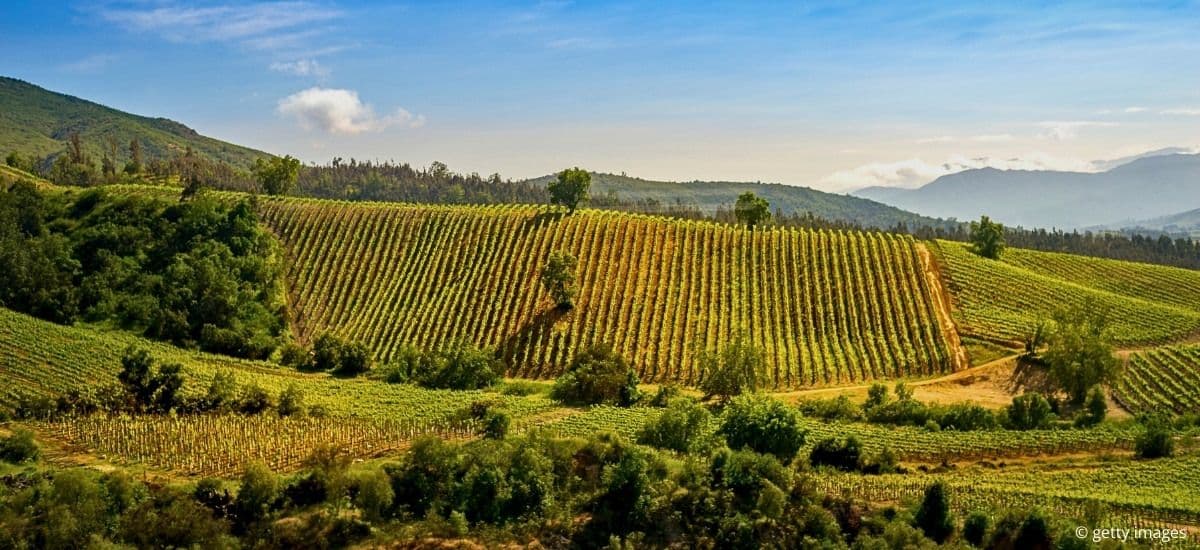 Valparaiso’s coastal vineyards, especially in Casablanca and Leyda, rely on cool Pacific fog to preserve acidity in grapes like Sauvignon Blanc and Pinot Noir.
Chile's geography functions as a natural fortress. The Atacama Desert to the north, the Antarctic to the south, the Pacific Ocean to the west, and the Andes Mountains to the east created a barrier that protected Chilean vineyards from the phylloxera louse, the devastating pest that destroyed most of Europe's vineyards in the late 19th century. As a result, Chile is one of the few wine-producing countries in the world where ungrafted European vines still grow on their own rootstock. This is not merely a historical footnote. It means that some Chilean vineyards maintain a direct biological link to pre-phylloxera Bordeaux that exists almost nowhere else.
The modern era of Chilean wine began in the early 1980s, when the introduction of stainless steel fermentation tanks and French oak barrels elevated quality dramatically. Export growth followed rapidly. By 1995, the country had roughly twelve major export wineries. A decade later, that number exceeded seventy. Today, Chile is the world's fourth largest wine exporter, shipping nearly 867 million liters to 141 countries. Total wine exports reached approximately $1.73 billion in 2024, with a domestic market valued at an estimated $3.8 billion. Roughly 80% of Chile's bottled wine exports come from certified sustainable wineries, a figure that reflects the country's growing commitment to environmental stewardship.
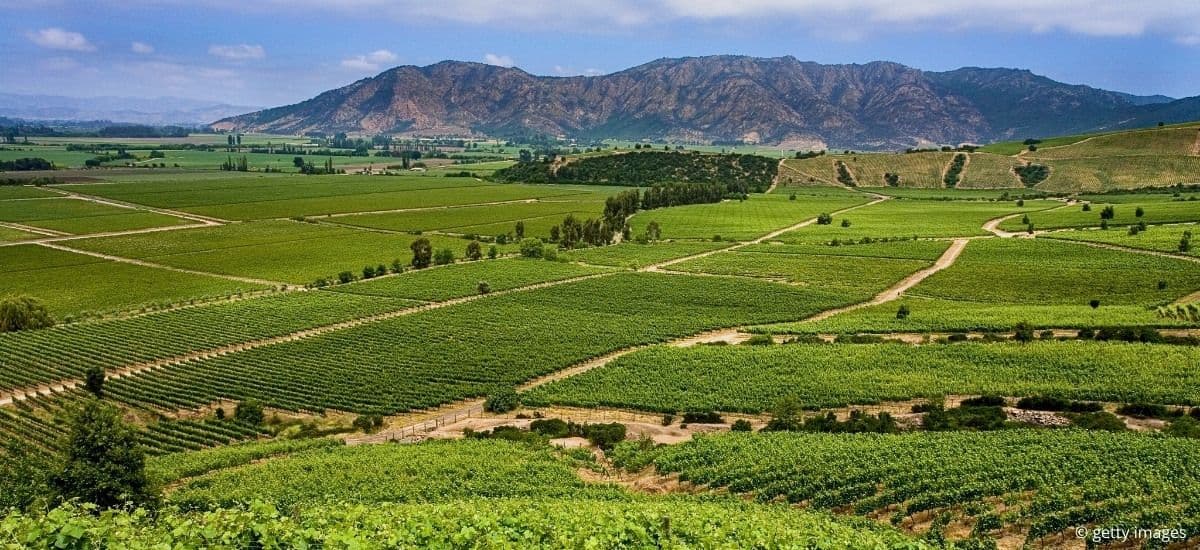 Colchagua became internationally famous in the 1990s for reviving Carménère, a grape once thought to be lost from Bordeaux.
Cabernet Sauvignon is Chile's most important red grape and performs exceptionally well across the Central Valley. The Maipo Valley, located just south of Santiago, is frequently called the Bordeaux of South America, and within it lies Puente Alto, one of the most prestigious subregions in all of Chilean wine. Sitting at roughly 700 meters elevation on the southern outskirts of the capital, Puente Alto benefits from alluvial soils carried down from the Andes by the Maipo River, dramatic diurnal temperature shifts caused by cold alpine winds, and morning shade from the mountain range itself. This combination produces Cabernet Sauvignon of exceptional structure, concentration, and minerality. Three of Chile's most celebrated wines originate here: Almaviva, a joint venture between Chateau Mouton-Rothschild and Concha y Toro established in 1996; Don Melchor, which Wine Spectator named its 2024 Wine of the Year; and Vinedo Chadwick, which defeated Chateaux Lafite, Latour, and Margaux at the famous Berlin Tasting of 2004, fundamentally reshaping international perceptions of Chilean fine wine.
Chile’s Pacific coastline acts like a giant cooling system, pushing acidity and freshness into regions that would otherwise be too warm.
Beyond Maipo, the Casablanca Valley has established itself as a source of vibrant Chardonnay and Sauvignon Blanc, cooled by Pacific fog and maritime breezes. The Colchagua Valley, further south, produces rich reds and has become a center for Carménère production. The Carménère story itself is one of the great tales in wine: this original Bordeaux variety was believed extinct after phylloxera wiped it from French vineyards. It had arrived in Chile in the 1850s but was misidentified as Merlot for over a century. In 1994, French ampelographer Jean-Michel Boursiquot, while walking through a vineyard at Vina Carmen in Maipo, noticed that certain "Merlot" vines had twisted stamens, a trait inconsistent with that variety. DNA testing confirmed his suspicion. What Chile had been growing and bottling as Merlot was, in many cases, the long-lost Carménère. Chile now cultivates nearly 10,000 hectares of the grape, representing over 97% of the world's total plantings, and Carmenere has become the country's signature variety.
Chile faces real challenges ahead, however. Production fell 15.6% in 2024 due to extreme weather, and climate change is forcing producers to explore new regions further south and at higher elevations, seeking cooler conditions that were unnecessary just a generation ago.
Argentina's wine story is inseparable from one grape: Malbec. Originally from Cahors in southwest France, where it was used in deeply colored Bordeaux blends, Malbec struggled in France's cool, damp climate and was largely abandoned after phylloxera. Its second life began in 1853, when Argentine President Domingo Faustino Sarmiento recruited French agronomist Michel Aime Pouget to help modernize the country's agriculture. Pouget arrived in Mendoza carrying vine cuttings from Bordeaux, Malbec among them. In the high-altitude desert at the foot of the Andes, the grape found conditions it had never known in France: intense sunlight, minimal rainfall, wide diurnal temperature swings, and well-drained alluvial soils. Malbec responded by developing thicker skins, deeper color, more concentrated flavors, and softer tannins than its French ancestor. It became, in every meaningful sense, a different wine.
The railroad connecting Mendoza to Buenos Aires, completed in 1885, opened the floodgates for commercial production. Spanish and Italian immigrants poured into the region, bringing viticultural knowledge and labor. For most of the 20th century, however, Argentina's wine industry focused on quantity over quality, with cheap, high-volume grapes like Criolla Grande and Cereza dominating. In the 1960s, growers were even encouraged to pull up Malbec plantings to make room for these bulk varieties. The turnaround came after Argentina's return to democracy in 1983, when producers like Nicolas Catena Zapata began studying the relationship between Malbec and terroir with scientific rigor, pioneering high-altitude plantings in the Uco Valley and attracting international consultants such as Paul Hobbs and Michel Rolland. Between 1990 and 2010, Malbec plantings in Argentina increased by approximately 175%.
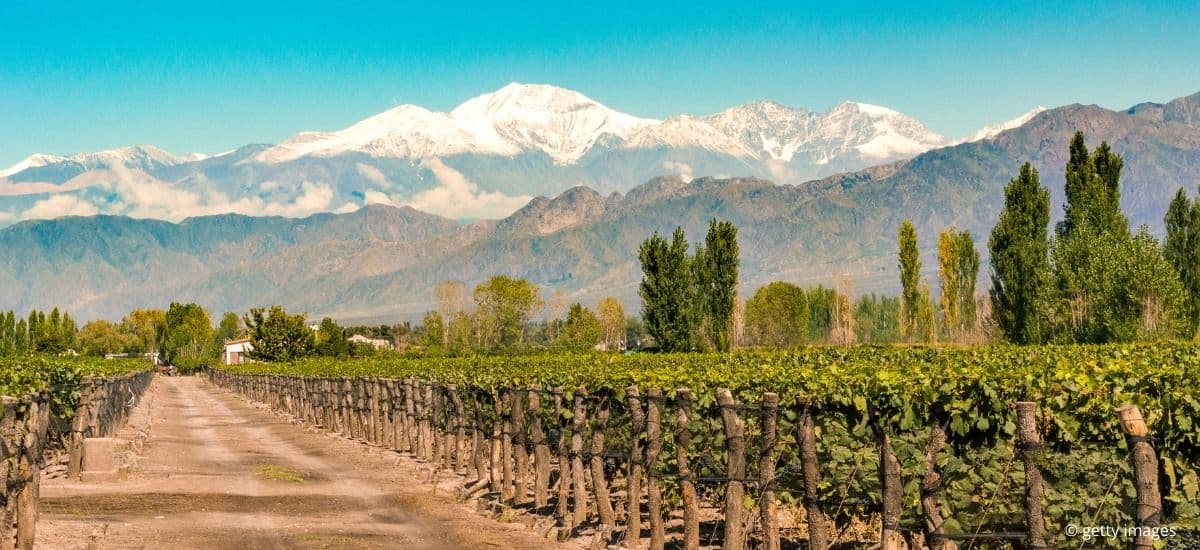 Mendoza’s vineyards sit in the rain shadow of the Andes, receiving less than 9 inches of rainfall annually, meaning nearly all irrigation comes from controlled Andean snowmelt.
Mendoza is the epicenter, contributing over 70% of national wine production from roughly 140,000 hectares. Within Mendoza, two subregions stand apart. Lujan de Cuyo, the historic heartland of Argentine Malbec, was the first subregion in the Americas to receive its own appellation of origin. Vineyards here sit around 900 to 1,000 meters in elevation, producing rich, ripe wines with generous dark fruit, smooth tannins, and notes of cocoa and sweet spice. The Uco Valley, located to the south, has emerged more recently as the quality frontier. With vineyards reaching as high as 1,700 meters, it produces Malbec that is more structured, more mineral-driven, and more elegant, with pronounced floral aromatics and a precision that reflects the extreme altitude and limestone-rich soils. Subregions within the Uco Valley, including Gualtallary, Altamira, and San Pablo, are increasingly recognized as individual terroirs of world-class distinction. Zuccardi Valle de Uco has earned multiple accolades as one of the best wineries on the planet, driven by its meticulous expression of these specific sites.
In the far north, the province of Salta offers something dramatically different. The Calchaqui Valley, centered on the town of Cafayate, contains some of the highest commercially cultivated vineyards on earth, with some exceeding 3,000 meters above sea level. The combination of extreme altitude, intense solar radiation, negligible rainfall, and vast temperature swings between day and night produces wines of extraordinary concentration and phenolic ripeness. Malbec performs superbly here, but Salta's most distinctive contribution is Torrontes, Argentina's only indigenous white grape variety. A natural cross between the Mission grape and Muscat of Alexandria, Torrontes produces intensely aromatic wines with notes of orange blossom, lychee, apricot, and pineapple, balanced by crisp acidity in the best examples. It is unlike any other white wine in South America.
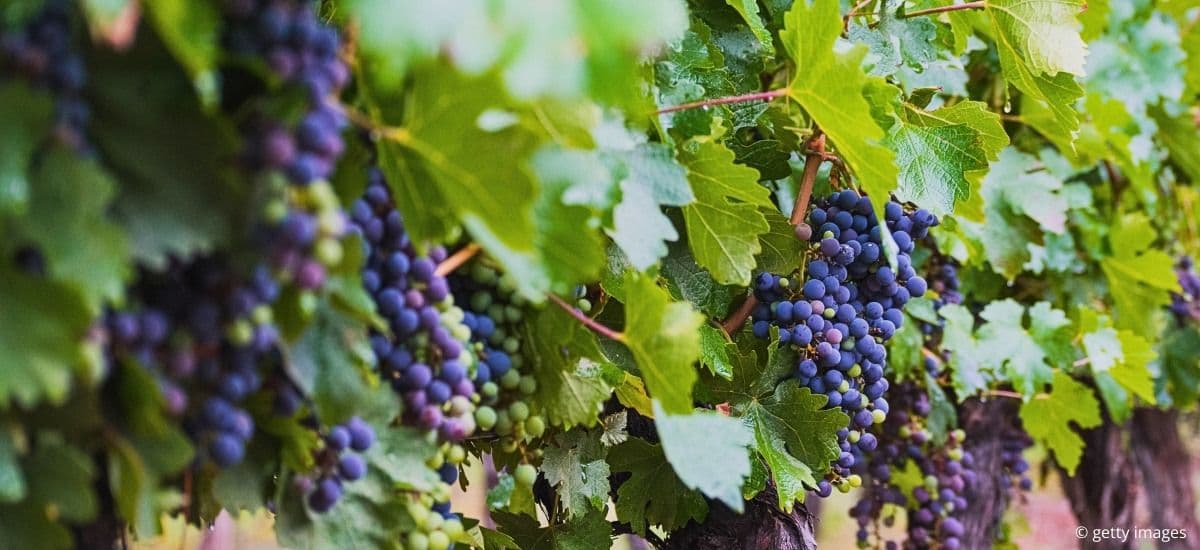 Malbec has changed the fortunes of Argentina, and has become one of the most popular re wines in the world.
Argentina today is the eighth largest wine producer in the world and the ninth largest consumer. The country has 856 active wineries across 18 provinces, with nearly 200,000 hectares under vine. Wine-related exports reached $933 million in 2024, a 15.3% increase over the previous year. Yet the industry faces serious headwinds. Domestic consumption has dropped 50% since 2003, falling another 12.5% in late 2025 alone. Inflation, volatile exchange rates, and declining purchasing power have hit the sector hard. Export volumes in 2025 fell to their lowest level since 2004. Iconic producers have begun debt restructuring. The Argentine wine industry is not disappearing, but it is at an inflection point, forced to balance its world-class quality potential against deep structural economic challenges.
Uruguay is the smallest and least known of South America's three principal wine-producing nations, but what it lacks in scale it compensates for in character. With approximately 6,000 hectares of vineyards, 164 active wineries, and production centered largely in the department of Canelones near Montevideo, Uruguay makes wines on an intimate, artisanal scale. Roughly 70% of its wineries are managed by the third to fifth generation of the founding families. Only 5% of total production is exported.
The country's flagship grape is Tannat, a thick-skinned, deeply tannic red variety originally from the Madiran region of southwest France. Tannat was introduced to Uruguay in 1870 by Don Pascual Harriague, a Basque immigrant, and the grape is still sometimes called Harriague in his honor. Where Tannat can be aggressively tannic and austere in Madiran, Uruguay's warmer maritime climate, 220 days of annual sunshine, and nearly 100 documented soil variations soften the grape considerably, producing wines that retain bold structure but deliver riper, more approachable fruit. Blackberry, dark plum, chocolate, leather, and baking spice are common descriptors. Tannat also contains the highest levels of polyphenols and resveratrol of any widely cultivated red grape.
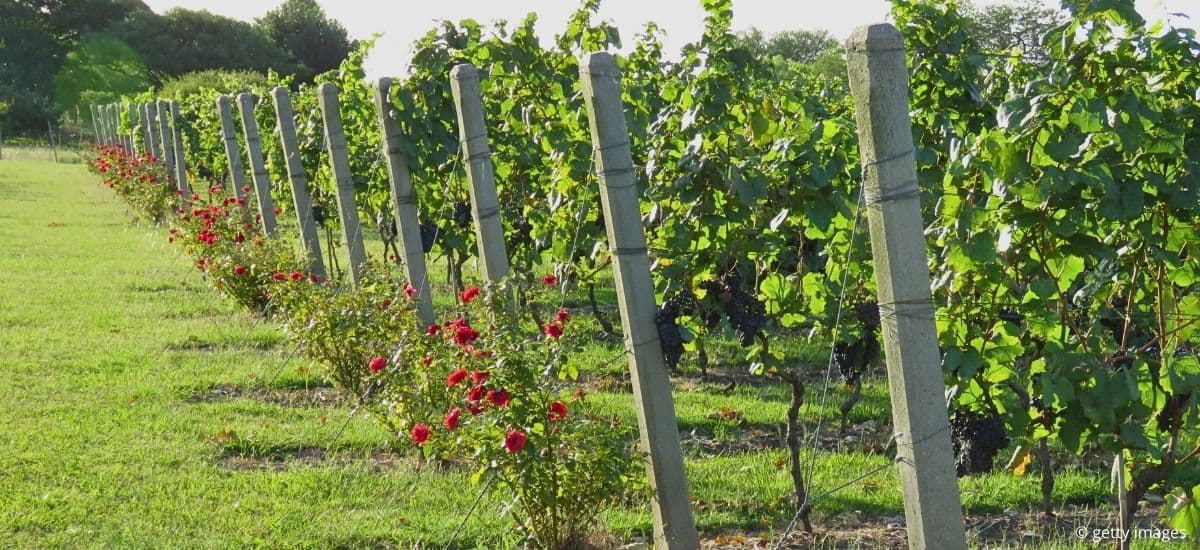 The Tannat grape has proven to be successful in Uruguay, and has gained in popularity over the last decade.
Beyond Tannat, Uruguay is gaining attention for Albariño, a crisp white grape introduced by Galician immigrants from northwestern Spain in 1954, which now accounts for roughly 13% of vineyard area and is being targeted for expansion into Asian markets. Cabernet Franc, Merlot, and Marselan also show considerable promise. The emerging coastal region of Maldonado, pioneered in 2001 by Bodega Alto de la Ballena, is producing cooler-climate styles across multiple varieties on poor, rocky soils influenced by Atlantic breezes. Uruguay's commitment to sustainability is notable: 31% of its vineyards were certified sustainable by 2023, and the country positions itself as a laboratory for responsible viticulture in the 21st century. Located between the same latitudes as Margaret River in Australia and Stellenbosch in South Africa, Uruguay's maritime climate bears more resemblance to Portugal than to its continental South American neighbors, giving its wines a freshness and vibrancy that distinguish them on the global stage.
South America's three wine nations have arrived at the present moment through remarkably different journeys. Chile leveraged its geographic isolation and Bordeaux heritage to build a massive export engine anchored by Cabernet Sauvignon and the rediscovered Carménère. Argentina transformed a discarded French grape into a global phenomenon, with Malbec now synonymous with the country itself. Uruguay bet on the obscure Tannat and built an intimate, family-driven industry of uncommon character. All three face shared challenges: climate volatility, shifting consumer demographics, and the economic pressures that confront wine industries worldwide. Yet the quality of the wines being produced across this continent has never been higher, and the range of styles available has never been broader. For anyone beginning to explore the world of wine, South America offers extraordinary diversity, compelling value, and stories that are still very much being written.
Chile’s vineyards benefit from natural geographic barriers including the Andes Mountains, the Pacific Ocean, the Atacama Desert, and the Patagonian ice fields, which historically limited the spread of vine diseases such as phylloxera. Combined with a Mediterranean climate and consistent sunshine, these conditions allow Chile to produce high quality wines with remarkable consistency year after year.
Cabernet Sauvignon thrives in Chile’s Central Valley, particularly in regions such as Maipo, Colchagua, and Cachapoal, where warm days and cool nights help develop ripe fruit alongside structured tannins. Many Chilean Cabernets display a recognizable profile of dark fruit, cassis, and herbal notes that reflect the influence of the Andes and coastal cooling.
Although Malbec originated in France, the grape found its modern identity in Argentina, particularly in the high elevation vineyards of Mendoza. The intense sunlight, dry climate, and altitude of the Andes foothills allow Malbec to produce deeply colored wines with concentrated fruit, smooth tannins, and broad global appeal.
Many of Argentina’s most important vineyards sit between 3,000 and 5,000 feet above sea level along the Andes Mountains. These elevations create warm daytime temperatures balanced by cool nights, helping grapes retain acidity while developing powerful flavor concentration.
Uruguay has built its reputation around the Tannat grape, a variety originally from southwest France that thrives in the country’s humid Atlantic influenced climate. Uruguayan Tannat wines often show rich dark fruit, firm structure, and a softer style than their French counterparts, making them increasingly recognized on the international stage.