Discovering Sonoma County Wine
Just north of San Francisco, a sprawling patchwork of vineyards, climates, and personalities produces some of the most exciting wines in the world. The surprise is how few people know the full story.
There is a quiet confidence to Sonoma County that sets it apart from its more famous neighbor to the east. Where Napa Valley has long commanded the spotlight and the premium price tag, Sonoma has gone about its work with productive modesty, cultivating a diversity of grapes, styles, and philosophies across a geography so varied it can feel like several wine regions folded into one. Stretching from the Pacific coastline through river valleys and volcanic ridgelines, the county encompasses more than 60,000 acres of vineyards and over a dozen distinct American Viticultural Areas.
What makes Sonoma compelling is its range. Boutique producers crafting a few hundred cases by hand exist alongside large operations moving millions of bottles annually, and both models produce wines worth attention. Production costs run somewhat lower than in Napa, which means that dollar for dollar, Sonoma frequently delivers remarkable quality at prices that feel generous by California standards. For anyone beginning a serious exploration of American wine, Sonoma is not a secondary destination. It is arguably the most complete one available.
Sonoma County contains more than 60,000 acres of vineyards and over 400 wineries, making it one of the largest premium wine regions in the United States.
A Place That Shaped a Movement
Sonoma County's viticultural history predates California statehood. In 1812, Russian fur traders planted some of the region's earliest grapevines at Fort Ross along the coast, and by the 1850s, Agoston Haraszthy, often called the father of California viticulture, had established Buena Vista Winery in the town of Sonoma. These early efforts laid the groundwork for what would become one of the most expansive and geographically diverse growing regions in the United States. By the late nineteenth century, the county already housed hundreds of producers, a boom interrupted by phylloxera, Prohibition, and the slow rebuilding that followed.
The modern era arrived decisively in the 1970s and 1980s, as a new generation of winemakers recognized what the old timers had always sensed: that Sonoma's sheer variety of microclimates could support an unusual breadth of grape varieties and wine styles. While Napa focused its identity largely around Cabernet Sauvignon, Sonoma became home to world class Pinot Noir, Chardonnay, Zinfandel, Syrah, and Cabernet in equal measure. The county earned its first AVA designation in 1981, and subsequent subdivisions have continued to map the relationship between geography and flavor with increasing specificity. Today, Sonoma contains 19 recognized AVAs, more than any other county in California, a fact that speaks directly to the complexity of its terrain.
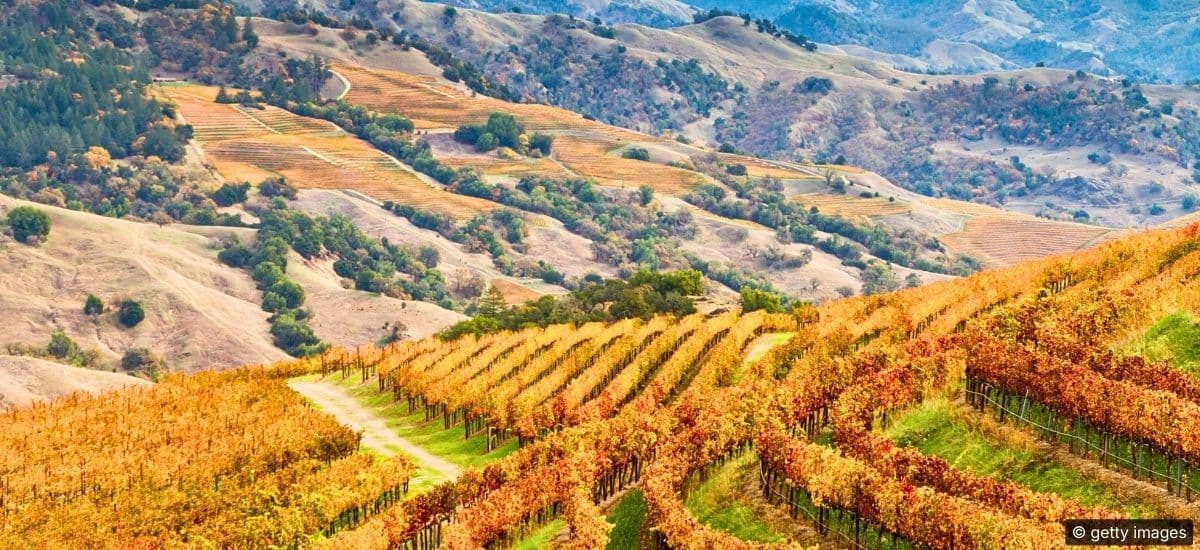 The region includes 19 American Viticultural Areas (AVAs), each with its own climate and growing conditions. The rolling hills of Alexander Valley, a key producer of Bordeaux varietals, shown here.
Where Rivers and Ridgelines Write the Wine List
Among Sonoma's many subregions, two stand out as essential points of entry for anyone looking to understand the county's potential. The Russian River Valley, carved by the river of the same name as it winds toward the Pacific, is one of California's premier cool climate growing areas. Marine fog pushes inland through the Petaluma Gap each morning, settling over the valley floor and keeping temperatures moderate well into the growing season. This fog influence is the defining force behind the region's celebrated Pinot Noir and Chardonnay, wines that combine ripe fruit character with a bright acidity and textural elegance that warmer zones cannot replicate.
Sonoma’s proximity to the Pacific Ocean creates cooling fog that helps grapes retain freshness and balance.
Alexander Valley, located in the county's northeastern corridor, presents a strikingly different proposition. Warmer, broader, and more sheltered from coastal influence, Alexander Valley excels with Cabernet Sauvignon, producing wines that offer the structural seriousness of the variety without the often prohibitive cost of Napa equivalents. The valley floor and benchland vineyards benefit from well drained gravelly soils and significant diurnal temperature swings that help grapes develop complexity while retaining freshness. Together, these two AVAs illustrate the remarkable stylistic span that a single county can achieve, from the delicate transparency of a fog-cooled Pinot Noir to the sun-warmed generosity of a hillside Cabernet.
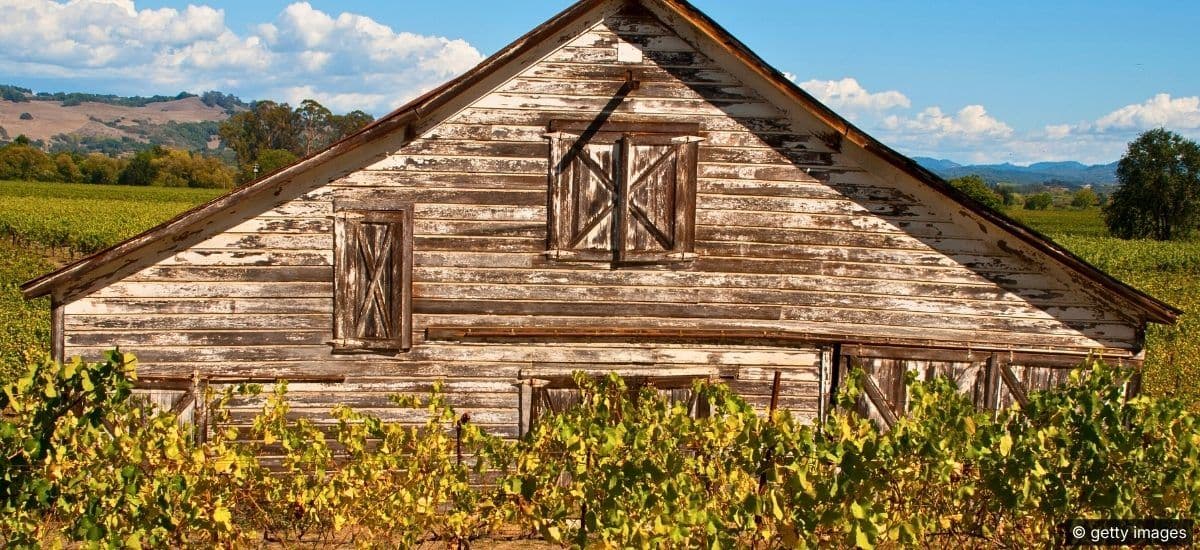 Pinot Noir and Chardonnay thrive in cooler coastal areas such as the Russian River Valley (above) and Sonoma Coast.
Beyond the Familiar Names
Part of what makes Sonoma so rewarding for the adventurous palate is the sheer number of subregions that remain relatively unexplored by the general public. The Sonoma Coast AVA, dramatically expanded in recent decades, encompasses wild, wind-battered ridgetop vineyards where growers push Pinot Noir and Chardonnay to their limits of concentration and tension. Dry Creek Valley, a narrow benchland appellation north of Healdsburg, is quietly home to some of the oldest Zinfandel vines in the state, many of them dry farmed and producing wines of startling depth from low yielding plants that have been in the ground for a century or more.
Smaller appellations like Bennett Valley, Knights Valley, and Moon Mountain contribute further layers to the county's identity, each offering wines that reflect their specific elevations, exposures, and soil types with genuine individuality. The presence of so many smaller, family run estates means that Sonoma rewards the drinker who is willing to look beyond familiar labels. Many of the county's most distinctive wines are produced in quantities small enough that they never reach the shelves of large retailers, available instead through mailing lists or tasting room visits. This combination of accessibility and discovery is rare in any wine region, and it gives Sonoma a character that feels both welcoming and endlessly interesting.
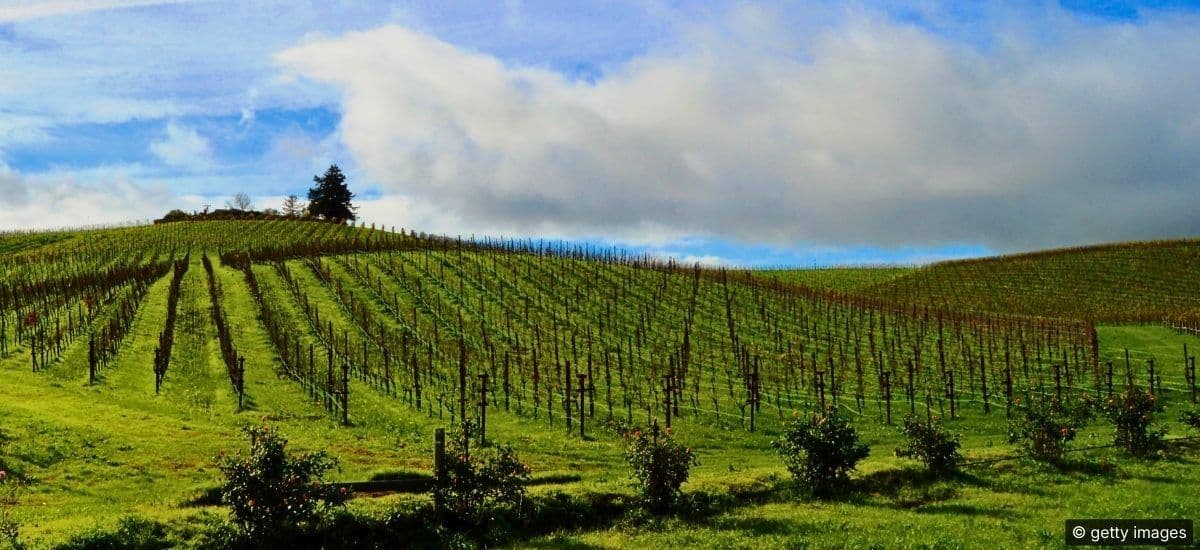 Sonoma County grows more than 50 grape varieties, showing its remarkable range of climates and soils. Carneros, shown here, is one of the coolest growing areas in California, located at the southern end of the county on the San Pablo Bay.
The Takeaway
Sonoma County occupies a unique position in the landscape of American wine. It possesses the history, the geographic complexity, and the depth of talent to stand alongside any wine region in the world, yet it continues to operate with a degree of approachability that its reputation arguably underserves. The diversity of its AVAs means that virtually every major grape variety and style finds a natural home somewhere within the county's borders, from cool climate sparklers and mineral-driven whites to bold, age-worthy reds.
For those who approach wine with curiosity rather than allegiance to a single style or label, Sonoma offers an unusually complete education. Its quality to price ratio remains one of the most attractive in California, a function of lower land costs relative to Napa and a culture that prizes craftsmanship over luxury branding. Whether one begins with a Russian River Valley Pinot Noir, an Alexander Valley Cabernet, or a field blend Zinfandel from a century-old Dry Creek vineyard, the invitation is the same: to pay attention, to explore widely, and to recognize that the most interesting wine regions are often the ones that have been too busy making great wine to spend much time telling you about it.


