Australia and New Zealand sit at the southern edge of the winemaking world, separated by roughly 2,000 kilometers of Tasman Sea, yet bound together in the global imagination as the twin pillars of Southern Hemisphere viticulture. They are not, however, interchangeable. Australia is a continent of extremes, producing everything from massive volumes of commercial wine in sun-baked inland plains to some of the most revered Shiraz and Cabernet Sauvignon on the planet from ancient vines in South Australia.
New Zealand is a narrow, cool-climate archipelago that built an entire global reputation on the back of a single grape, Sauvignon Blanc, before proving it could produce Pinot Noir of world-class caliber. Together, they represent two distinct philosophies of New World winemaking: one vast, bold, and endlessly diverse; the other precise, maritime, and fiercely quality-driven. Both are essential knowledge for any student of wine.
Harvest in the Southern Hemisphere happens roughly six months opposite Europe and North America, meaning February to April is crush season below the equator.
Australia
The history of Australian wine begins in 1788, when Captain Arthur Phillip, the founding governor of New South Wales, carried vine cuttings from the Cape of Good Hope to Sydney. The early decades were defined by trial and error in an unfamiliar climate, but the arrival of James Busby, often called the Father of Australian Viticulture, changed the trajectory of the industry. In the early 1830s, Busby traveled through the vineyards of Spain and France, collecting over 650 vine cuttings that he brought back to Sydney and planted at the Royal Botanic Gardens and on his own property in the Hunter Valley. These cuttings, which included Shiraz, Grenache, Cabernet Sauvignon, and Semillon, became the genetic foundation of Australian wine. Many were propagated and distributed to vineyards across New South Wales, Victoria, and South Australia, and because phylloxera never fully devastated the Australian continent the way it did Europe, some of these original plantings survive today. The Barossa Valley, in particular, harbors some of the oldest continuously producing Shiraz vines in the world, with individual plants dating to the 1840s and 1850s.
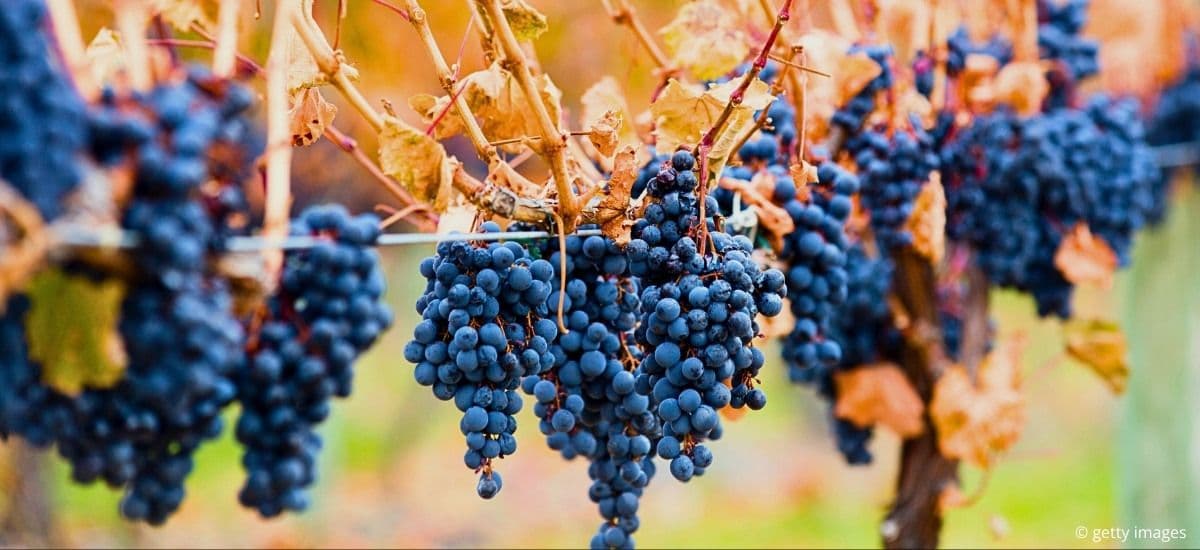 Shiraz (pictured above) remains Australia’s flagship red grape, but regions like Margaret River have built international prestige on Cabernet Sauvignon.
The nation's first golden age ran from the 1860s through the First World War, fueled by export demand from the British Empire and sustained by European immigrants. German settlers from Silesia were instrumental in establishing the Barossa Valley in the 1840s and 1850s. Swiss immigrants helped develop the Geelong and Yarra Valley regions of Victoria. John Reynell established South Australia's first commercial vineyard in McLaren Vale in 1838, and Thomas Hardy, who learned winemaking under Reynell, founded his own property in 1853, building a name that endures in Australian wine to this day.
For most of this era, however, fortified wines dominated production. The shift toward table wine did not begin in earnest until the 1950s and 1960s, when visionary winemakers like Max Schubert at Penfolds began crafting wines of ambition and longevity. Schubert's Grange Hermitage, first produced in 1951 from old-vine Shiraz, is now considered one of the greatest wines on the planet and proved that Australia could compete at the highest level of quality.
The modern Australian wine industry is staggering in its scale and diversity. The country has 65 recognized wine regions spread across every state, with approximately 2,156 wineries, 5,408 grape growers, and 146,244 hectares under vine. Total production reached 1.04 billion liters in 2024 from a crush of 1.43 million tonnes. Wine exports totaled 619 million liters valued at AUD $2.19 billion, with China reclaiming its position as the top destination by value after the removal of punitive tariffs in March 2024. The sector contributes an estimated AUD $51.3 billion annually to the Australian economy and employs over 203,000 people. Wine tourism generates significant additional revenue, with 7.5 million winery visits recorded in 2024.
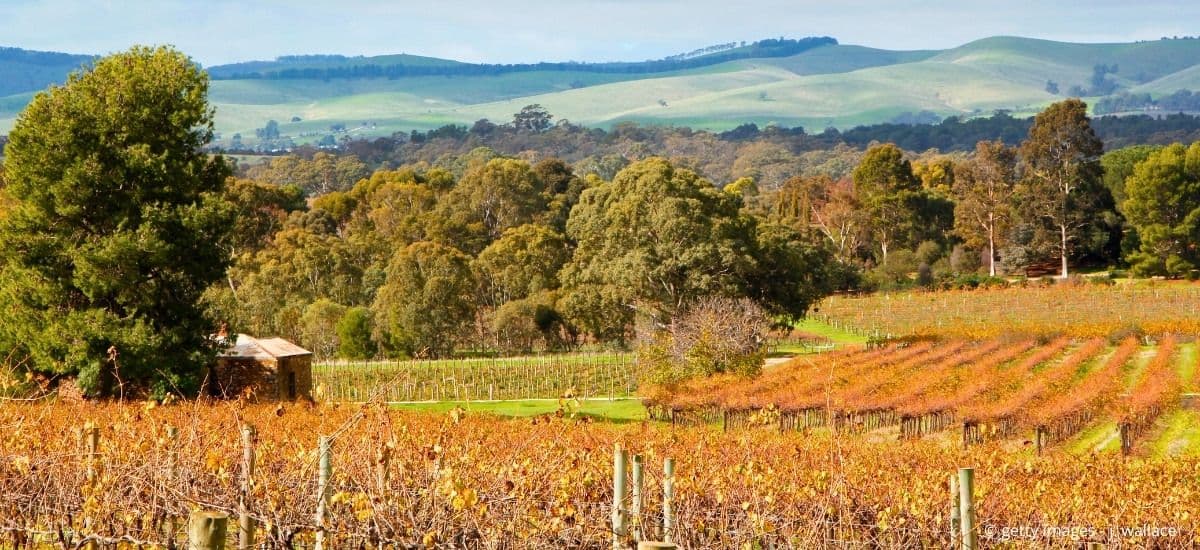 Barossa is home to some Shiraz vines planted in the 1840s, still producing intensely concentrated fruit today.
South Australia is the engine room, producing over 75% of the nation's premium wine. The Barossa Valley is the spiritual home of Australian Shiraz. Its 13,626 hectares of vineyards, many planted on deep sandy soils over clay, produce wines of extraordinary depth, richness, and power, defined by dark fruit, chocolate, licorice, and baking spice. The region processes over 600,000 tonnes of grapes annually and contributes more than AUD $740 million each year to the state's wine economy. Names like Penfolds, Henschke, Peter Lehmann, and Torbreck are synonymous with the Barossa style. Henschke's Hill of Grace vineyard, planted in the 1860s, produces one of the most celebrated single-vineyard Shiraz wines in the world.
Neighboring McLaren Vale, south of Adelaide on the Fleurieu Peninsula, offers a slightly different expression. First planted in 1838, the region is home to over 7,300 hectares of vines and more than 160 vineyards. Shiraz accounts for over half of plantings, but McLaren Vale has also become a hotbed for Mediterranean varieties. Grenache, Vermentino, Tempranillo, Montepulciano, and Fiano are increasingly common, reflecting a growing recognition that the warm, Mediterranean climate is ideally suited to grapes beyond the traditional French varieties. The wines tend to be generous, ripe, and full-bodied, with a distinctive savory quality that distinguishes them from the bigger, more opulent Barossa style.
The Clare Valley, roughly 100 kilometers north of Adelaide, has earned a global reputation for Riesling. The region's cool nights and warm days produce dry Rieslings of remarkable purity and longevity, with steely acidity, lime juice intensity, and the capacity to age beautifully for decades. Coonawarra, on the Limestone Coast, is defined by its famous terra rossa soil, a thin layer of red clay over limestone, that produces structured, elegant Cabernet Sauvignon widely regarded as among Australia's finest.
Victoria, Australia's smallest mainland state, contains more wine producers than any other but ranks third in overall volume. Its diversity is extraordinary. The Yarra Valley, just outside Melbourne, was Victoria's first wine district, with vines planted at Yering Station in 1838. After a long dormancy, the region was revived in the 1960s and 1970s, and today it is celebrated for cool-climate Pinot Noir, Chardonnay, and elegant Shiraz. The Mornington Peninsula, Geelong, and Beechworth all produce distinctive cool-climate wines. In the northeast, Rutherglen is famous for a completely different tradition: fortified Muscat and Topaque (Muscadelle) of astonishing richness and complexity, made by a solera-like process that can concentrate flavors over decades.
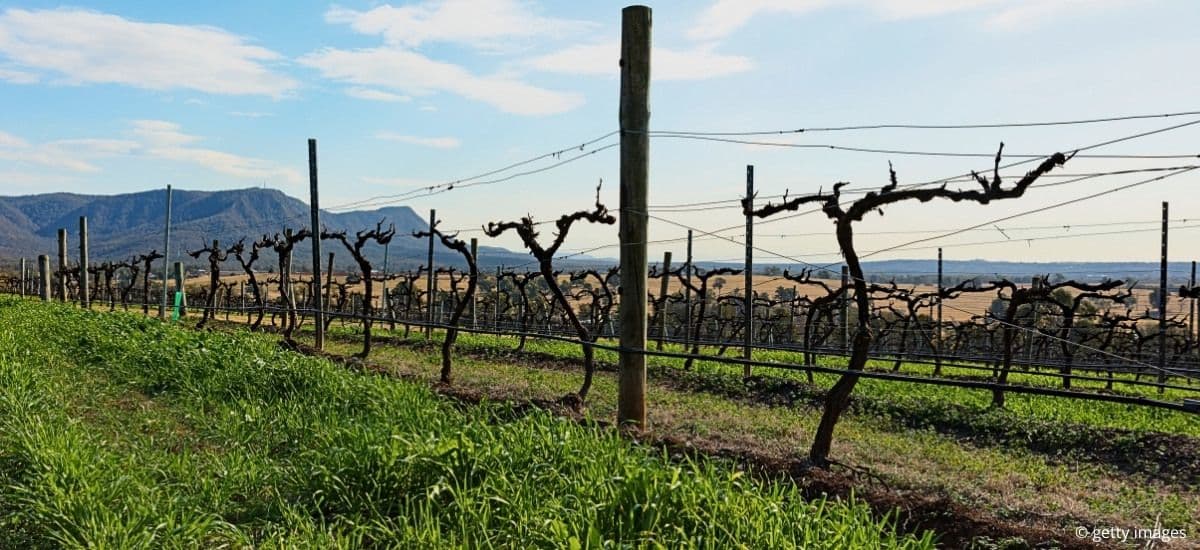 Hunter Valley is famous for a distinctive style of low-alcohol Semillon that begins lean and citrus-driven but can age for decades into honeyed, toasty complexity.
Western Australia contributes a small fraction of national volume but a disproportionate share of prestige. Margaret River, established by cardiologist Dr. Tom Cullity at Vasse Felix in 1967, has become one of the country's most acclaimed regions. Its maritime climate, moderated by Indian Ocean breezes, produces powerful Cabernet Sauvignon, refined Chardonnay, and distinctive Semillon-Sauvignon Blanc blends. Over 150 wineries now operate in the region. Tasmania, meanwhile, has emerged as a source of exceptional cool-climate Chardonnay, Pinot Noir, and traditional method sparkling wine.
The 2024 national vintage data revealed a significant shift: more Chardonnay grapes were crushed than any other variety for the first time in a decade, with 332,643 tonnes processed, a 31% increase over 2023. Shiraz, long the dominant grape, accounted for 46% of red plantings but saw declining tonnages and average prices. Over 130 grape varieties are now commercially grown in Australia, and the movement toward so-called alternative varieties, including Nero d'Avola, Fiano, Assyrtiko, and Gruner Veltliner, reflects a wine industry in active evolution. Sustainability is also accelerating, with the country's largest family-owned winery, Casella Family Brands, achieving Sustainable Winegrowing Australia certification in 2024.
Australia's challenges are real. A wine inventory surplus of approximately 2.2 billion liters accumulated by 2023, the result of overproduction, pandemic disruptions, and the devastating loss of the Chinese export market between 2020 and 2024. An estimated 20% of bearing vines are considered surplus to requirements, and millions of vines were uprooted in 2024. Per capita domestic consumption continues to decline. Yet the quality revolution that began decades ago has not slowed. The wines emerging from Australia's best regions are more site-specific, more restrained, and more compelling than at any point in the nation's history.
New Zealand
New Zealand's wine industry is a study in rapid ascent. As recently as 2002, the country had just 13,787 hectares of productive vines and exported a mere 23 million liters worth NZD $246 million. Two decades later, vineyard area has nearly tripled, and exports reached NZD $2.4 billion in 2023 before settling to NZD $2.1 billion in 2024. Nearly 90% of all wine produced in New Zealand is exported, making it the most export-focused wine industry in the world. In the United States, New Zealand wine has posted 16 consecutive years of sales growth, the only top-ten supplying country to record a volume increase in 2024. Among major wine-importing nations, New Zealand commands the second-highest average bottle price, trailing only France.
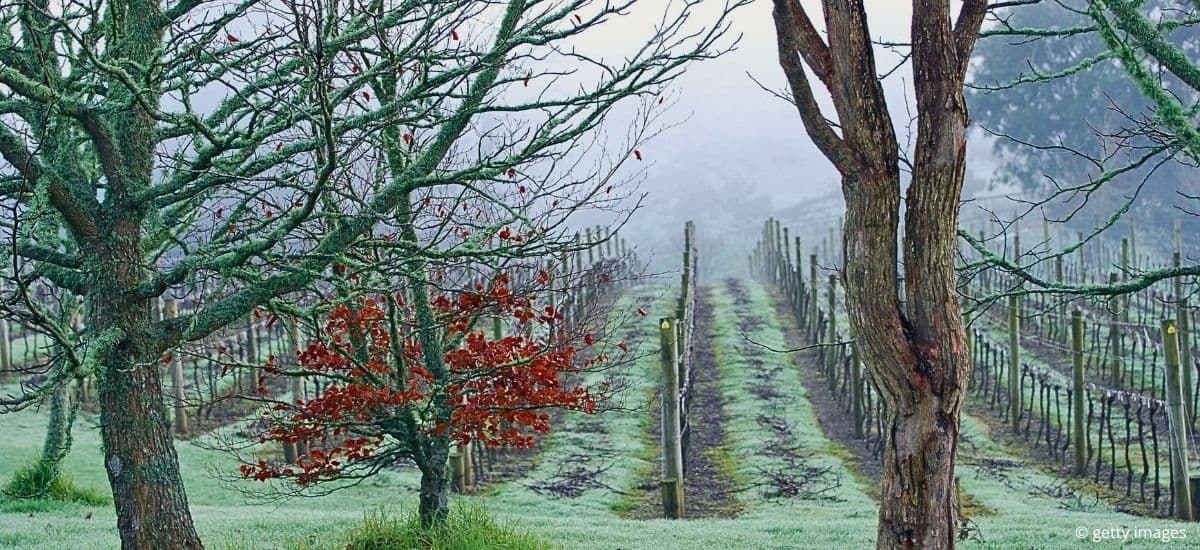 The vineyards around Auckland, especially on Waiheke Island, benefit from a warm maritime climate that produces surprisingly structured Bordeaux-style blends.
The roots of New Zealand wine stretch to the mid-19th century. British oenologist James Busby (the same Busby who shaped Australian viticulture) produced wine on the North Island as early as 1836. Mission Estate Winery, founded in 1851 in Hawke's Bay by French Marist missionaries, is the country's oldest continuously operating winery. But for most of the 20th century, New Zealand's wine industry was negligible, focused on bulk production of hybrid grapes and hampered by restrictive liquor laws, including the notorious "six o'clock swill" regulation that limited bar service to a single hour per day. The modern era began in the late 1960s and 1970s, when economic restructuring pushed the country toward higher-value agricultural exports, and a government-sponsored vine pull scheme paid growers to replace inferior varieties like Muller-Thurgau with premium grapes. Sauvignon Blanc was first planted in Marlborough in 1975 by Frank Yukich of Montana Wines. The rest, as the cliche goes, is history.
Many Southern Hemisphere regions combine intense sunlight with dramatic cooling influences like mountains or oceans, creating wines with ripe fruit and vibrant natural acidity.
Marlborough is by far the largest and most important wine region, accounting for roughly 70% of all vineyard plantings and 75% of total production. Its Sauvignon Blanc has become one of the most recognized wine styles on earth, defined by explosive aromatics of passionfruit, citrus, cut grass, and gooseberry, with a crisp, vibrant acidity that is unmistakable. Approximately 78% of all New Zealand wine production is Sauvignon Blanc, and the variety's decade-long compound annual growth rate in export markets has been 3.6%, with particularly strong performance in the United States. The region is divided into three sub-regions: the Wairau Valley, which is warmer with cool nights and produces riper, rounder styles; the Southern Valleys, with heavier clay soils that delay ripening and add body; and the Awatere Valley, cooler and more exposed, yielding a greener, more herbaceous expression. Marlborough Pinot Noir has also been gaining serious international attention, with wines from the region winning multiple champion trophies at international competitions.
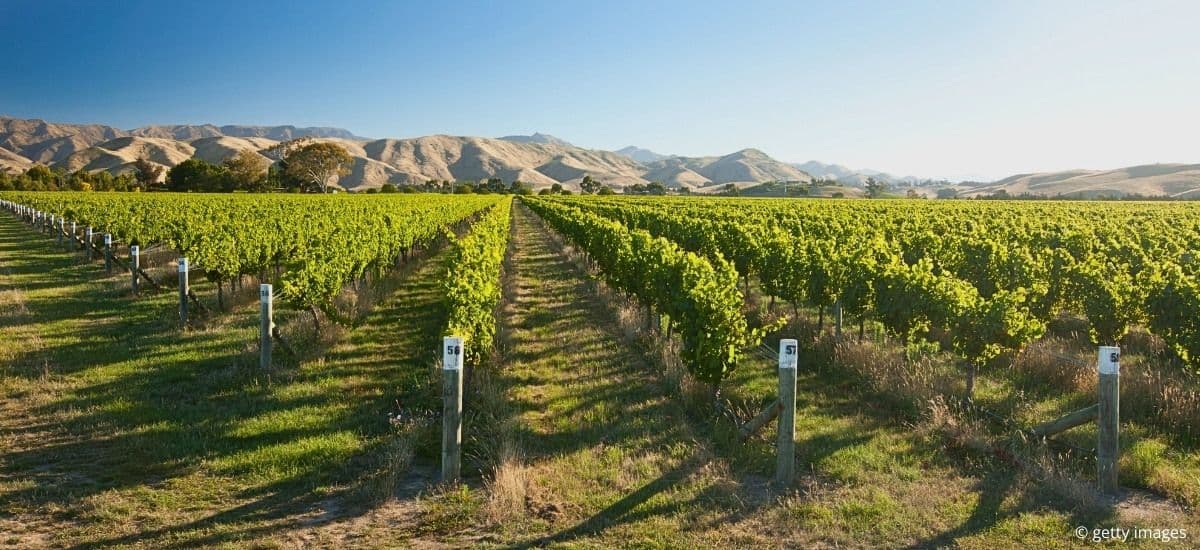 Marlborough put New Zealand on the global wine map in the 1980s with its explosively aromatic Sauvignon Blanc, characterized by bright acidity and signature tropical and grassy notes.
The Appellation Wine Marlborough group, formed in 2018, now certifies over 50 wineries, ensuring that wines carrying the badge meet strict quality criteria for origin, growing standards, and independent expert approval. This reflects a broader industry concern with protecting the Marlborough name as production scales up.
Hawke's Bay, on the central east coast of the North Island, is New Zealand's second largest region and its oldest, with winemaking dating to 1851. In 2023, it was officially declared a Great Wine Capital of the World, joining Bordeaux, Napa Valley, and Verona. Hawke's Bay is the warmest of New Zealand's major regions and the country's center for Bordeaux-style red wines. Merlot has overtaken Cabernet Sauvignon as the primary red grape, and the region produces rich, structured blends that rival those of the mid-tier Medoc. Chardonnay is equally significant, producing full-bodied, complex whites. The Gimblett Gravels, a subregion defined by ancient alluvial riverbed soils that drain freely and retain heat, is one of the few geographical indications in the world designated by soil type rather than political boundary. It has become internationally recognized for concentrated, age-worthy reds.
In these southern hemisphere regions, the combination of modern winemaking and diverse climates has created wines defined more by place and precision than by strict tradition.
Central Otago, on the South Island near Queenstown, is the world's southernmost major wine region and the only one in New Zealand with a true continental climate. Vineyards sit at approximately 300 meters elevation, protected from maritime influence by the towering Southern Alps. The region's modern wine history began in the early 1980s when pioneers like Alan Brady, Ann Pinckney, and Rolfe Mills, all amateurs acting against expert advice, planted experimental vines and discovered that Pinot Noir thrived in the intense UV light, dramatic temperature swings, and schist-derived soils. By 1996, there were just 11 wineries and 92 hectares. By 2020, there were 133 wineries and 1,930 hectares.
Pinot Noir accounts for roughly 70% of plantings, and Central Otago's expressions are distinctive for their intense color, deep concentration, flavors of Doris plum and dark cherry, and a structure and minerality that set them apart from the more elegant, earthy Pinot Noirs of Martinborough or the brighter, fruit-forward styles of Marlborough. Actor Sam Neill's Two Paddocks estate, located in the region, has become an unofficial ambassador for Central Otago Pinot Noir worldwide. Sub-regions including Bannockburn, Gibbston, Bendigo, Pisa, and Alexandra are increasingly recognized as producing distinctly different expressions of the grape.
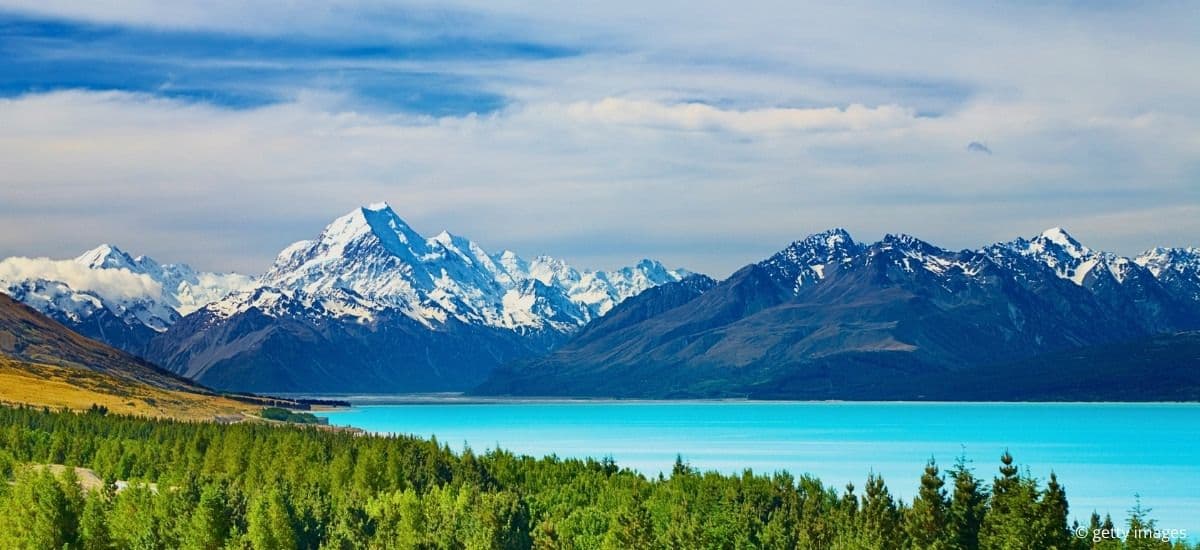 Central Otago is considered the world’s southernmost commercial wine region and is renowned for intensely flavored, high-altitude Pinot Noir.
Wairarapa, at the southern tip of the North Island, encompasses the boutique subregion of Martinborough, known for refined, earthy Pinot Noir that tends to be more structured than Central Otago's bold style. Nelson, near the top of the South Island, enjoys the sunniest climate in New Zealand, averaging over 2,400 sunshine hours annually, and produces fine Sauvignon Blanc and aromatic whites.
Four varieties account for over 90% of New Zealand's wine production: Sauvignon Blanc, Pinot Noir, Pinot Gris, and Chardonnay. Pinot Noir is the country's second most planted grape and has doubled its vineyard area since the early 2000s. Syrah, though tiny in volume, is earning critical acclaim from Hawke's Bay. Riesling, Gewurztraminer, and Bordeaux blends round out a surprisingly diverse portfolio for a country that produces just 1% of the world's wine.
Sustainability certifications are widespread, with a large majority of vineyards participating in formal environmental programs.
Sustainability is deeply embedded in the New Zealand wine ethos. The Sustainable Winegrowing New Zealand program, celebrating its 30th anniversary in 2025, now certifies 98% of all vineyard area in the country. An additional 16% of wineries hold organic certification. This near-universal commitment to sustainable practice is unmatched by any other major wine-producing nation.
Challenges persist. Cyclone Gabrielle devastated the Hawke's Bay region in 2023, destroying an estimated 20,000 tonnes of grapes. Large vintages combined with declining global consumption have created surplus inventory. The 2024 export decline of 11% reflects broader headwinds across the global wine market. Yet the 2025 vintage is being heralded as one of the finest in recent memory across multiple regions, and New Zealand's premium positioning, averaging 25% above the global average price for Sauvignon Blanc, continues to insulate it from the worst of the downturn.
The Takeaway
Australia and New Zealand occupy different ends of the winemaking spectrum, yet both demonstrate what happens when ambition meets ideal growing conditions. Australia's story is one of scale, heritage, and reinvention: from colonial plantings and fortified wine traditions through the export boom of the 1990s to today's quality revolution, where old-vine Barossa Shiraz, cool-climate Yarra Valley Pinot Noir, and Margaret River Cabernet Sauvignon stand alongside the world's finest wines.
New Zealand's story is one of speed, precision, and focus: a country that went from obscurity to global relevance in barely two generations, built on the extraordinary success of Marlborough Sauvignon Blanc and now diversifying into Pinot Noir, Chardonnay, and Syrah of genuine distinction. Both industries face the shared headwinds of oversupply, declining per capita consumption, and climate uncertainty. Both continue to produce wines of increasing complexity and regional specificity. For the curious wine lover, these two nations together offer an education in what the Southern Hemisphere can achieve when the land, the climate, and the will to make great wine all converge in the same place.


