Of Forests and Cellars: A Primer on Oak in Wine
From medieval shipping vessel to modern flavor architect, the wooden barrel has quietly become one of the most consequential tools in the winemaker's craft.
Few elements in winemaking exert as much quiet influence as oak. A wine that has spent time in a barrel is not the same wine that entered it, and yet the transformation happens slowly, invisibly, across months and sometimes years. Oak is at once a container, a flavoring agent, a structural collaborator, and a slow-acting chemist, contributing tannin, aroma, texture, and the gentle effects of oxidation that no other tool in the cellar can replicate.
The choice of whether to use oak at all, and if so what kind, how new, how toasted, and for how long, ranks among the most consequential decisions a winemaker can make. These decisions shape not just the flavor of a finished wine but its capacity to age, its commercial identity, and its relationship to centuries of tradition. Understanding oak is not optional for anyone serious about wine. It is foundational, the kind of knowledge that quietly improves every glass that follows.
Oak barrels do more than store wine, they actively shape it. During aging, small amounts of oxygen pass through the wood, softening tannins and helping flavors integrate over time. At the same time, compounds from the oak itself contribute aromas and flavors such as vanilla, cedar, clove, coconut, smoke, and baking spice.
A Vessel Born of Necessity
Oak entered the wine world not through any deliberate quest for flavor but through the practical demands of transportation. The ancient Mediterranean wine trade had long relied on clay amphorae, which were heavy, fragile, and ill-suited to the rougher terrain of northern Europe. When Roman legions pushed into Gaul during the first centuries of the common era, they encountered Celtic coopers who had been crafting wooden barrels for beer, and the advantages were immediate. Barrels were lighter, more durable, easier to roll, and far less likely to shatter during the long overland journeys that supplied the empire's expanding wine consumption.
What began as a logistical solution gradually revealed itself as something more interesting. Winemakers and merchants began to notice that wine emerging from oak after months of storage tasted different than wine that had been moved directly to bottle. It was rounder, more complex, more harmonious. By the medieval period, the barrel had transcended its origins as mere shipping container and become a deliberate winemaking tool. The cooper's trade flourished alongside viticulture, and certain regions developed reputations for the quality of their oak. The forests of France, in particular, emerged over the centuries as the gold standard, a status they retain today despite considerable competition from elsewhere in the world.
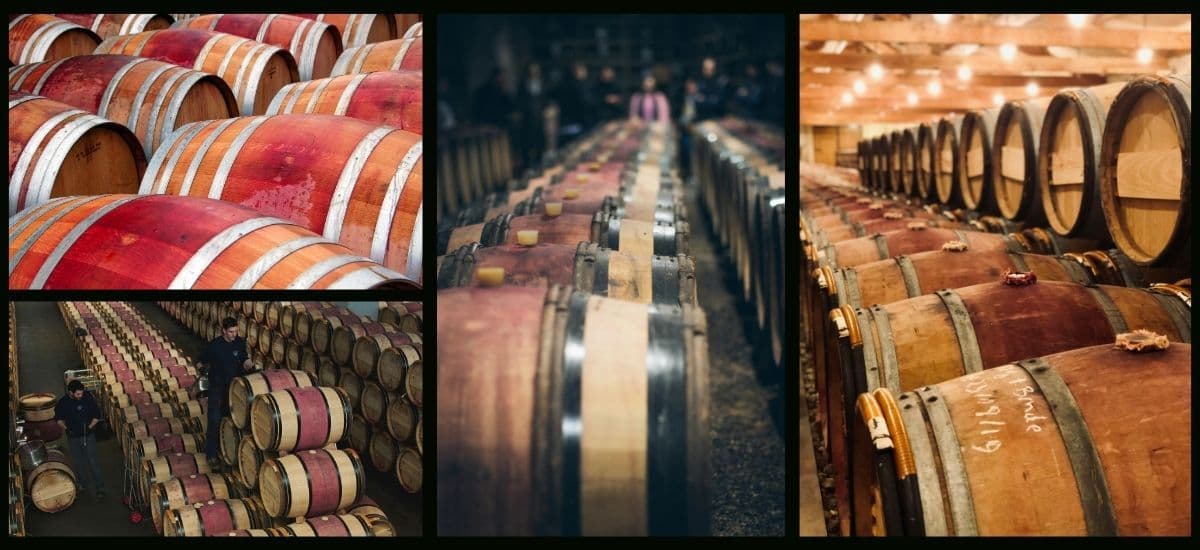 Understanding oak is one of the keys to understanding why some wines taste the way they do. From vanilla and spice to smoke and texture, oak leaves a clear signature in the glass.
Forests of Influence
Not all oak is created equal, and the differences between sources are dramatic enough to reshape a wine's identity entirely. French oak, prized for its tight grain and subtle aromatic profile, comes primarily from a handful of state-managed forests in the country's center: Tronçais, Allier, Nevers, Vosges, and Limousin among them. Each forest produces wood of slightly different character, with tighter-grained oaks contributing more restrained, integrated flavors and looser grains offering more aggressive wood influence. American oak, harvested largely from the Ozarks and the Appalachian foothills, grows faster, develops a more open grain, and delivers bolder notes of vanilla, coconut, and dill, qualities that have made it the traditional choice for bourbon and a favorite for certain styles of Rioja and Australian Shiraz.
Eastern European oak occupies a fascinating middle ground. Hungarian and Slavonian oak, long favored by Italian producers of Chianti and Brunello, offer structural integrity comparable to French oak at a more accessible price point, with their own distinct aromatic signature. The final transformation happens in the cooperage, where staves are bent into shape over open fires and the barrel's interior is toasted to varying degrees. A light toast preserves more of the raw wood character. A medium toast introduces warmer notes of caramel and baking spice. A heavy toast pushes toward smoke, espresso, and dark roasted sugars. Every variable matters, and every variable compounds across the months and years of contact between wine and wood.
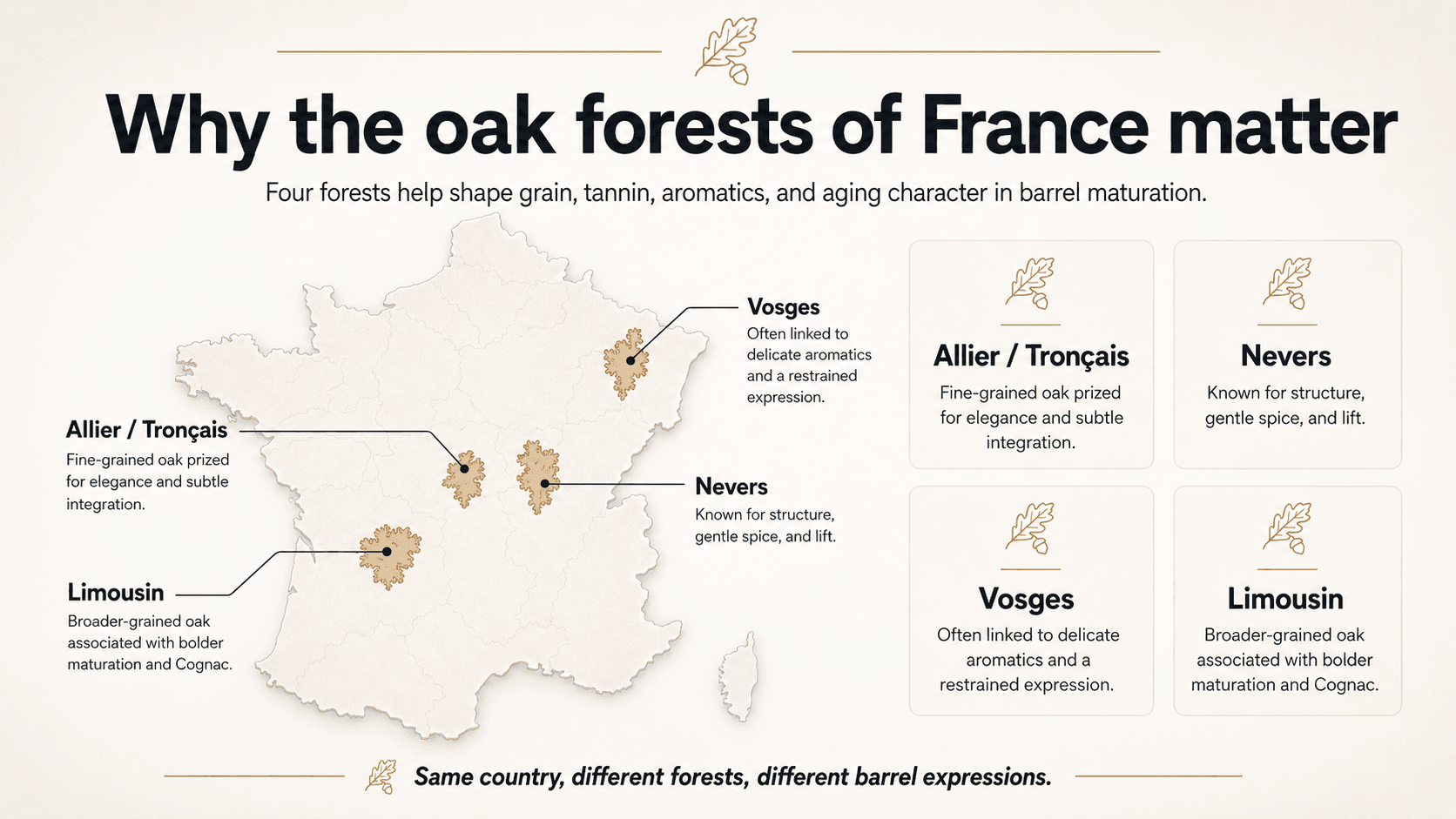 The Allier Forest is known for tight-grain French oak that contributes subtle spice, elegance, and fine tannin integration. The Tronçais Forest is one of France’s most famous barrel sources, prized for refined oak influence and slow-growing trees.
What Does the Barrel Actually Do?
The transformations oak imparts on wine are both chemical and physical, unfolding through processes that scientists have only fully understood in recent decades. As wine sits in a barrel, it extracts a constellation of compounds from the wood itself. Vanillin contributes its namesake aroma. Oak lactones produce coconut and creamy textures. Eugenol introduces clove and warm spice. Furfural and its derivatives lend caramel and toasted bread notes. Hydrolyzable tannins from the wood add structural support to the wine's existing tannic backbone, contributing to longevity and helping to stabilize color in red wines through interactions with anthocyanin pigments.
Equally important is what oak allows to happen rather than what it adds directly. Barrels are slightly porous, permitting a slow, controlled exchange of oxygen between the wine and the outside atmosphere. This micro-oxygenation softens harsh tannins, integrates flavors, and develops complexity in ways that sealed vessels cannot replicate. A small fraction of the wine evaporates as well, a loss poetically termed the angel's share, which concentrates what remains. The age of the barrel matters enormously. A new oak barrel imparts the fullest range of its aromatic character during the first use, then progressively less with each subsequent fill. By the third or fourth use, the barrel functions more as a neutral vessel for oxygenation than as a flavor source. Knowing how to deploy new and used barrels in combination is one of the cellar master's most refined skills.
Oak has influenced wine for centuries, shaping some of the world’s most iconic styles. From the forests of France to the cooperages of America, barrel selection remains one of the most important decisions in winemaking.
The Takeaway
Oak is not a flavor to be applied to wine like a seasoning, though it is sometimes used that way with regrettable results. At its best, oak is a partner, a slow collaborator that draws out latent qualities already present in the fruit and adds dimensions the grape alone cannot achieve. The finest oaked wines do not taste of oak. They taste of themselves, more deeply and more completely, with the wood's contributions integrated so thoroughly that they become inseparable from the wine's character. This is the difference between a winemaker who uses oak as a tool and one who uses it as a crutch.
For the drinker, an awareness of oak opens an entire vocabulary for understanding what is happening in the glass. Vanilla and coconut suggest American oak. Cedar and subtle spice point toward French. Pronounced caramel and smoke indicate a heavier toast. The absence of any oak character can be just as deliberate and just as expressive, as winemakers across the world increasingly question whether their grapes need the wood at all. Oak has shaped wine for two thousand years, and it continues to evolve as producers experiment with concrete, amphora, stainless steel, and alternative woods. Yet the barrel endures, a quiet and ancient piece of technology that still produces some of the most profound transformations available to anyone who makes or drinks wine seriously.


