North America is home to one of the most diverse and dynamic winemaking landscapes on earth. From the sun-drenched valleys of Baja California to the frost-bitten vineyards of Ontario's Niagara Peninsula, from the volcanic soils of Oregon's Willamette Valley to the glacially carved Finger Lakes of New York, this continent produces wine of extraordinary range and ambition. Three nations, hundreds of distinct growing regions, and centuries of accumulated knowledge converge to form an industry that is at once deeply rooted in tradition and relentlessly forward-looking. Understanding North American wine begins with understanding its breadth, its resilience, and its refusal to be defined by any single style or region.
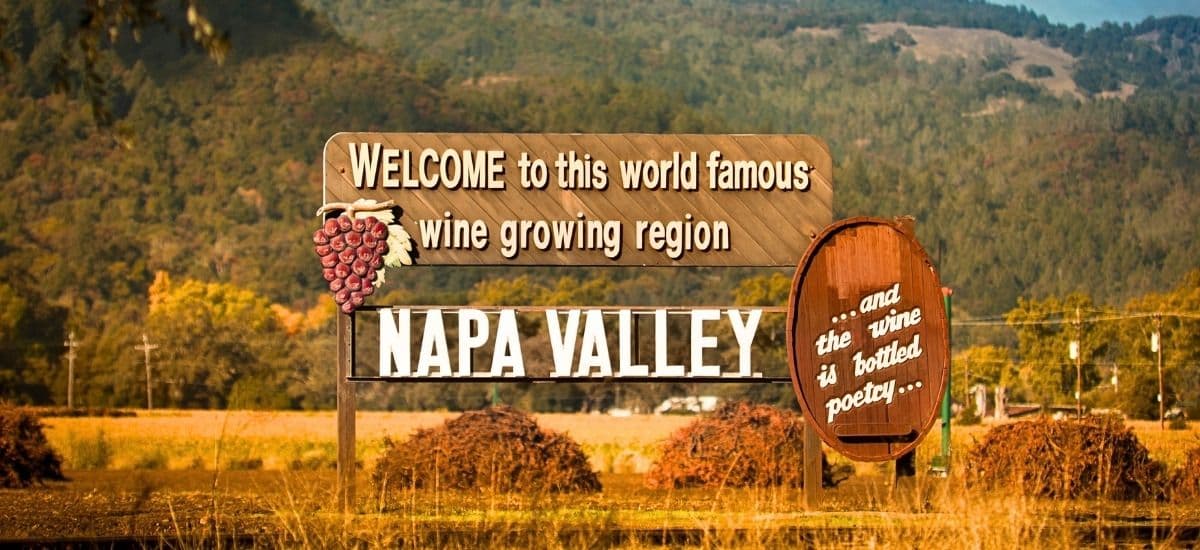 Napa Valley represents only a small fraction of total U.S. wine production, yet it drives a disproportionate share of the country’s fine-wine reputation and global luxury pricing.
United States
Introduction to California Wine
California is not just a wine region. It is, by nearly every measure, the engine of the American wine industry. Responsible for approximately 81 percent of all wine produced in the United States and ranking as the fourth largest wine producer in the world, behind only France, Italy, and Spain, California occupies a position of global significance that few New World regions can rival. For anyone beginning their journey into wine, understanding California is not optional. It is foundational.
The state's combination of geography, climate, ambition, and innovation has produced a wine culture unlike any other. With over 110 grape varieties cultivated across 154 federally recognized American Viticultural Areas, California offers a staggering range of styles, from rich and powerful Napa Valley Cabernet Sauvignons to elegant, cool-climate Pinot Noirs from the Sonoma Coast. To appreciate the scope of what California offers, it helps to begin where the story started.
A Brief History of California Wine
The history of winemaking in California dates back to the late 18th century, when Spanish Franciscan missionaries planted the first vines at the Mission San Diego de Alcalá around 1769. These missionaries cultivated a grape known simply as the Mission grape, a variety of limited quality but sufficient for producing sacramental wine. As the mission system expanded northward through the 21st and final mission in Sonoma, viticulture followed.
By the mid-1800s, California winemaking had evolved well beyond the missions. The Gold Rush brought an influx of settlers, many of European descent, who recognized the agricultural potential of the land. Pioneers like Agoston Haraszthy, a Hungarian immigrant often called the father of California viticulture, began importing cuttings of European Vitis vinifera varieties and planting them in Sonoma County. Charles Krug and the Beringer brothers established wineries in Napa Valley during this era, laying the groundwork for what would become the most famous wine region in the Americas. By 1889, California wines had earned 34 awards at the World's Fair in Paris.
Then came devastation. The phylloxera epidemic of the late 19th century destroyed vast swaths of vineyards across the state. Before the industry could fully recover, Prohibition (1920 to 1933) delivered a near-fatal blow, shuttering commercial wineries and reducing an emerging industry to a shadow of its former self. Only a handful of operations survived by producing sacramental wine or shipping grapes to home winemakers.
The modern renaissance of California wine began gradually in the decades following Prohibition, but the defining moment arrived on May 24, 1976. In a blind tasting organized in Paris by British wine merchant Steven Spurrier, a panel of French wine experts evaluated California wines alongside celebrated French benchmarks. To the shock of the wine world, a 1973 Chateau Montelena Chardonnay and a 1973 Stag's Leap Wine Cellars Cabernet Sauvignon defeated their French counterparts in their respective categories. The event, now famously known as the Judgment of Paris, shattered the assumption that fine wine was the exclusive domain of Europe. It placed California on the global stage and catalyzed a wave of investment, innovation, and expansion that continues to shape the industry today.
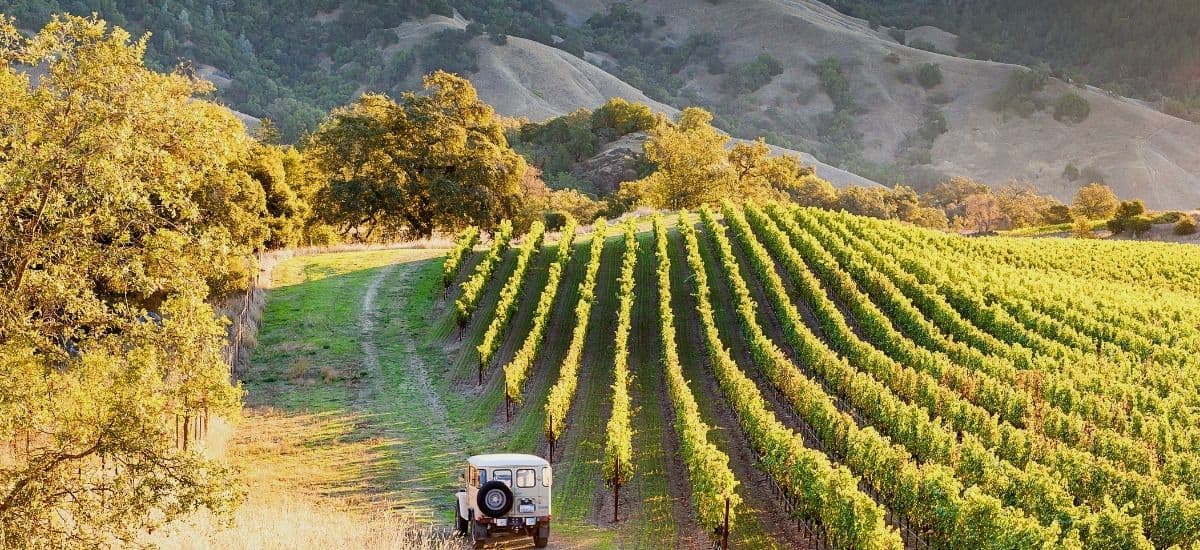 Sonoma County, pictured here, is often a relaxing excursion from the busy Napa Valley, offering visitors a more intimate experience.
Understanding California's Important AVAs
An American Viticultural Area, or AVA, is a designated grape-growing region defined by geographic, geologic, and climatic features. California is home to 154 AVAs, more than any other state. These range from sweeping multi-county designations to tiny, hyper-specific sites. For beginners, understanding a handful of the most significant AVAs provides a strong framework.
Napa Valley is the most recognized wine region in California and arguably in the entire New World. Despite producing only about four percent of the state's total wine volume, Napa commands an outsized share of California's premium wine market. Its 16 sub-AVAs, including Oakville, Rutherford, Stags Leap District, and Howell Mountain, are synonymous with world-class Cabernet Sauvignon. The valley's warm days, cool nights, and well-drained soils create ideal conditions for producing structured, age-worthy red wines.
Sonoma County offers remarkable diversity across its 19 AVAs. Russian River Valley is celebrated for Pinot Noir and Chardonnay, benefiting from Pacific fog that moderates temperatures and extends the growing season. Alexander Valley is known for bold Cabernet Sauvignon, while Dry Creek Valley has long been a stronghold for Zinfandel. The newer West Sonoma Coast AVA has earned international recognition for cool-climate viticulture at its finest.
Paso Robles, located on the Central Coast in San Luis Obispo County, has emerged as one of the most exciting and dynamic wine regions in the state. With 11 distinct sub-AVAs, Paso Robles is known for Rhone-style wines, particularly Syrah, Grenache, and Mourvedre blends, as well as increasingly impressive Cabernet Sauvignon from its warmer eastern reaches.
Santa Barbara County, made famous in popular culture by the 2004 film Sideways, is home to exceptional Pinot Noir and Chardonnay from the Santa Maria Valley and Sta. Rita Hills AVAs. The unique east-west orientation of its transverse valleys channels cool ocean air inland, creating growing conditions more commonly associated with Burgundy than Southern California.
The Central Valley, including the Lodi AVA, represents the volume engine of California wine. Lodi alone contains over 100,000 acres of planted vineyards and is America's largest AVA by plantings. Often overlooked by enthusiasts focused on premium regions, Lodi is the source of outstanding old-vine Zinfandel and offers tremendous value.
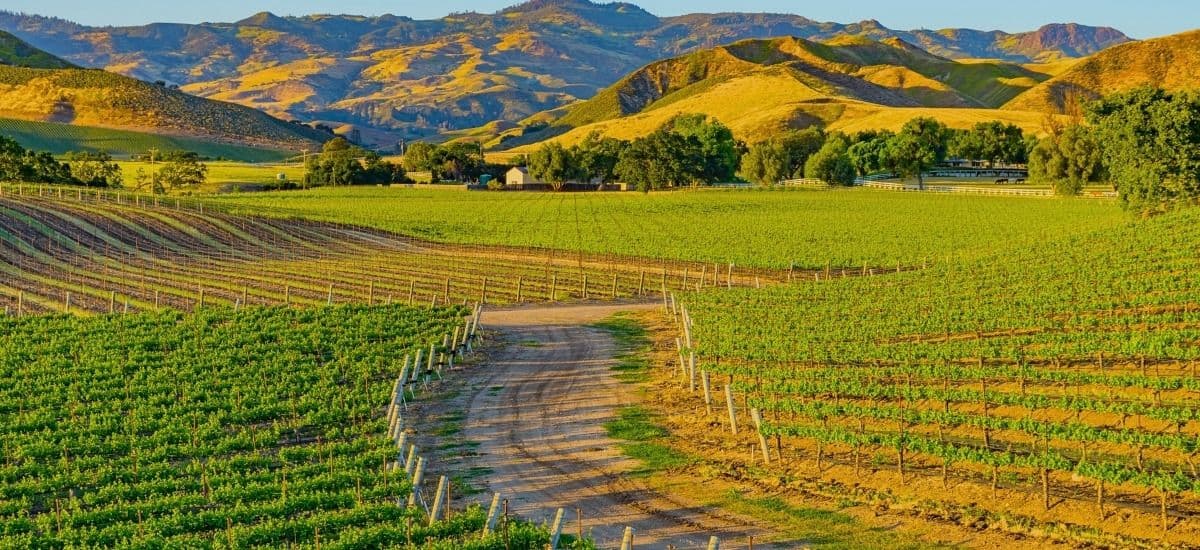 Santa Ynez is just one of the many smaller AVA's nested inside of Santa Barbara County making great wines.
Styles of Wine
California produces virtually every style of wine imaginable, from bone-dry whites to lusciously sweet dessert wines, from delicate sparkling wines to bold, tannic reds.
The state is particularly celebrated for its full-bodied red wines. Napa Valley Cabernet Sauvignon, characterized by ripe dark fruit, firm tannins, and often generous oak influence, represents the pinnacle of California red winemaking for many collectors. Zinfandel, often considered America's heritage grape despite its Croatian origins, yields wines that range from jammy and fruit-forward to structured and peppery, depending on the region and winemaker's approach.
On the white side, Chardonnay reigns. California Chardonnay spans a wide spectrum, from the rich, buttery, oak-aged styles that defined the 1990s to the leaner, more mineral-driven expressions now coming from cooler coastal sites. Sauvignon Blanc, often produced in a crisp and aromatic style, has also gained significant popularity.
Sparkling wine production has grown substantially, with regions like Anderson Valley in Mendocino County and Los Carneros producing traditional method sparkling wines that rival many offerings from Champagne. Rosé, once an afterthought, has become a serious category across the state.
The Grapes That Matter Most
Five grape varieties dominate California's vineyards and collectively account for the majority of production. Cabernet Sauvignon leads with approximately 94,000 planted acres, representing over 21 percent of the state's total vineyard area. Chardonnay follows closely with around 86,000 acres, making up roughly 19 percent. Pinot Noir occupies about 47,000 acres at just over 10 percent, followed by Zinfandel at approximately 36,000 acres and Merlot at around 32,000 acres.
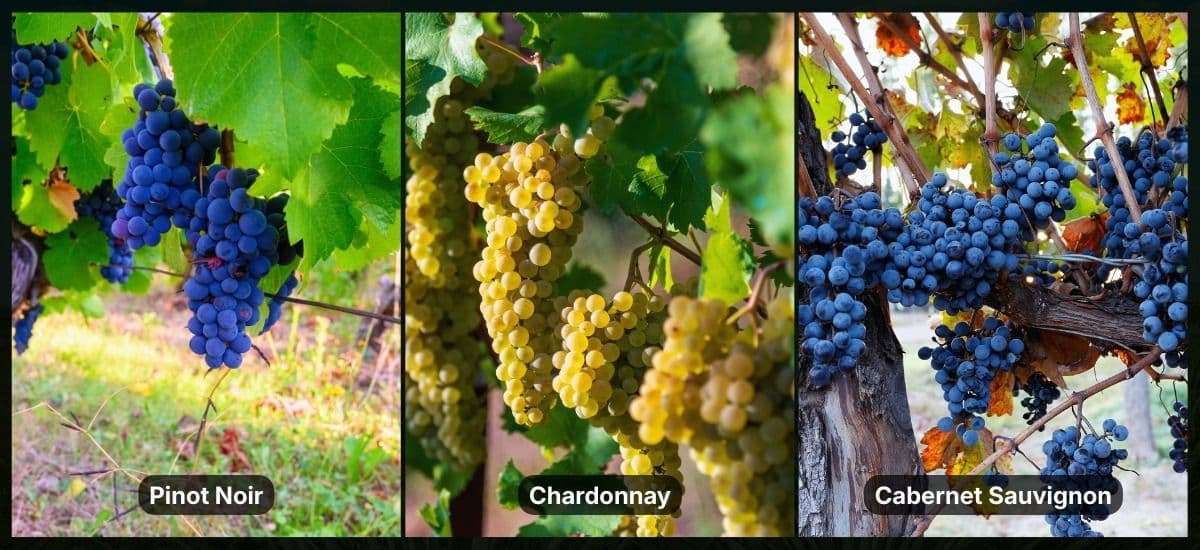 International grape varietals thrive in California's beautiful Mediterranean climate.
Beyond these five, California cultivates an impressive diversity of varieties. Syrah, Petite Sirah, Grenache, Mourvedre, and Barbera contribute to the state's red wine portfolio, while Sauvignon Blanc, Viognier, Riesling, and Gewurztraminer add dimension to the white wine landscape. In total, more than 110 grape varieties are grown commercially in California, and that number continues to expand as winemakers experiment with varieties better suited to warming conditions.
Economic Impact
The economic footprint of California wine extends far beyond the vineyard. The industry generates approximately $84.5 billion in total economic activity within the state and supports roughly 1.1 million jobs nationwide, including approximately 422,000 within California itself. Wine country tourism draws over 42 million visitors annually, contributing more than $8 billion in tourism expenditures. In tax revenue alone, the industry contributes over $14 billion combined at the state, local, and federal levels.
However, the industry is currently navigating a period of significant challenge. Wine consumption in the United States has declined notably in recent years, driven by shifting generational preferences, rising health consciousness, and increased competition from alternative beverages such as seltzers, ready-to-drink cocktails, and non-alcoholic options. California wine production in 2024 fell to its lowest level since 1999, with output declining over 17 percent in a single year. Tens of thousands of vineyard acres have been removed or abandoned as the industry works to balance supply with softening demand. Despite these headwinds, the estimated retail value of California wine has grown, indicating a shift toward premium production even as overall volume contracts.
What Every Beginner Should Know
For those just beginning to explore California wine, a few principles will serve you well. First, price does not always equal quality. Regions like Lodi, Paso Robles, and parts of Sonoma County produce outstanding wines at accessible price points. Second, the label matters. When a wine lists an AVA rather than simply "California" as its appellation, it means that at least 85 percent of the grapes came from that specific area, offering a more defined sense of place. Third, California's diversity is its greatest asset. If you find that Napa Cabernet is too bold, a Santa Barbara Pinot Noir may be exactly right. If oaky Chardonnay is not your preference, seek out unoaked versions from cooler regions.
California wine is both a tradition and a living experiment. It honors the legacy of missionaries, gold rush immigrants, and visionary winemakers while constantly evolving in response to new tastes, new science, and new challenges. Understanding California is, in many ways, understanding the ambition and adaptability that define American winemaking itself.
Oregon Wine
If California represents the volume and ambition of American winemaking, Oregon represents its soul. With just over 47,000 planted acres and roughly 1,076 wineries, Oregon produces only about one percent of the nation's total wine output. Yet that modest figure belies an outsized reputation. Oregon has built its identity on precision, restraint, and an uncompromising commitment to quality over quantity, with 70 percent of its wineries producing fewer than 5,000 cases per year.
The story of Oregon wine begins in earnest in the 1960s and 1970s, when pioneering winemakers like David Lett of The Eyrie Vineyards planted Pinot Noir in the Willamette Valley, a decision that many in the industry considered misguided at the time. The cool, maritime climate of western Oregon, however, proved remarkably well suited to Burgundian varieties. Lett's 1975 South Block Reserve Pinot Noir placed among the top wines in a 1979 blind tasting organized by Robert Drouhin of the prestigious Burgundy house Joseph Drouhin. That result drew international attention and, notably, drew Drouhin himself to Oregon, where his family would later establish Domaine Drouhin Oregon in the Dundee Hills.
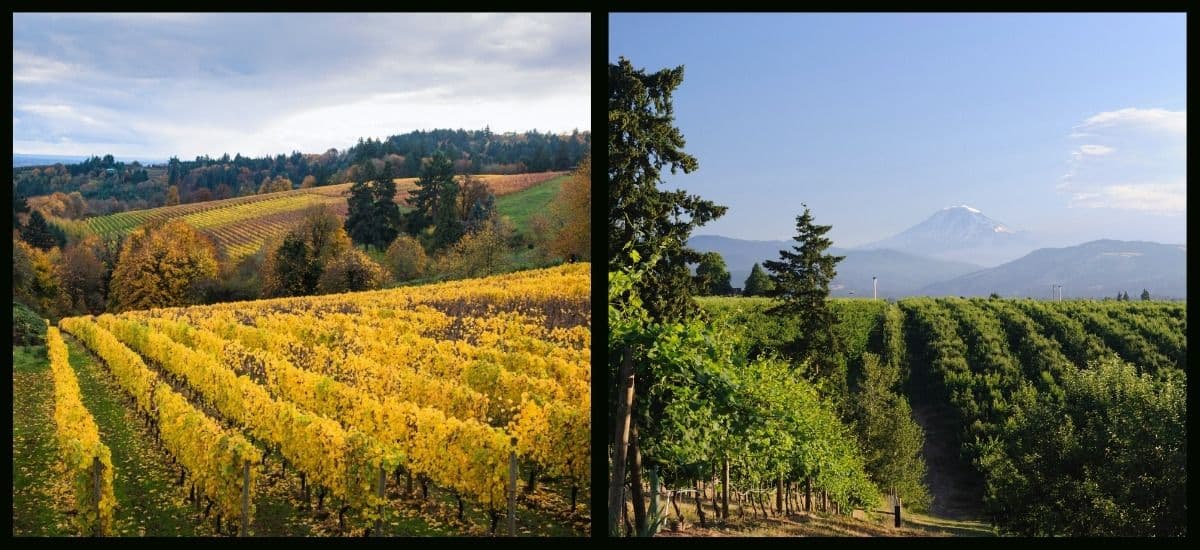 Oregon has become a benchmark for world-class Pinot Noir grown in long, sunlit summer days in the Willamette Valley..
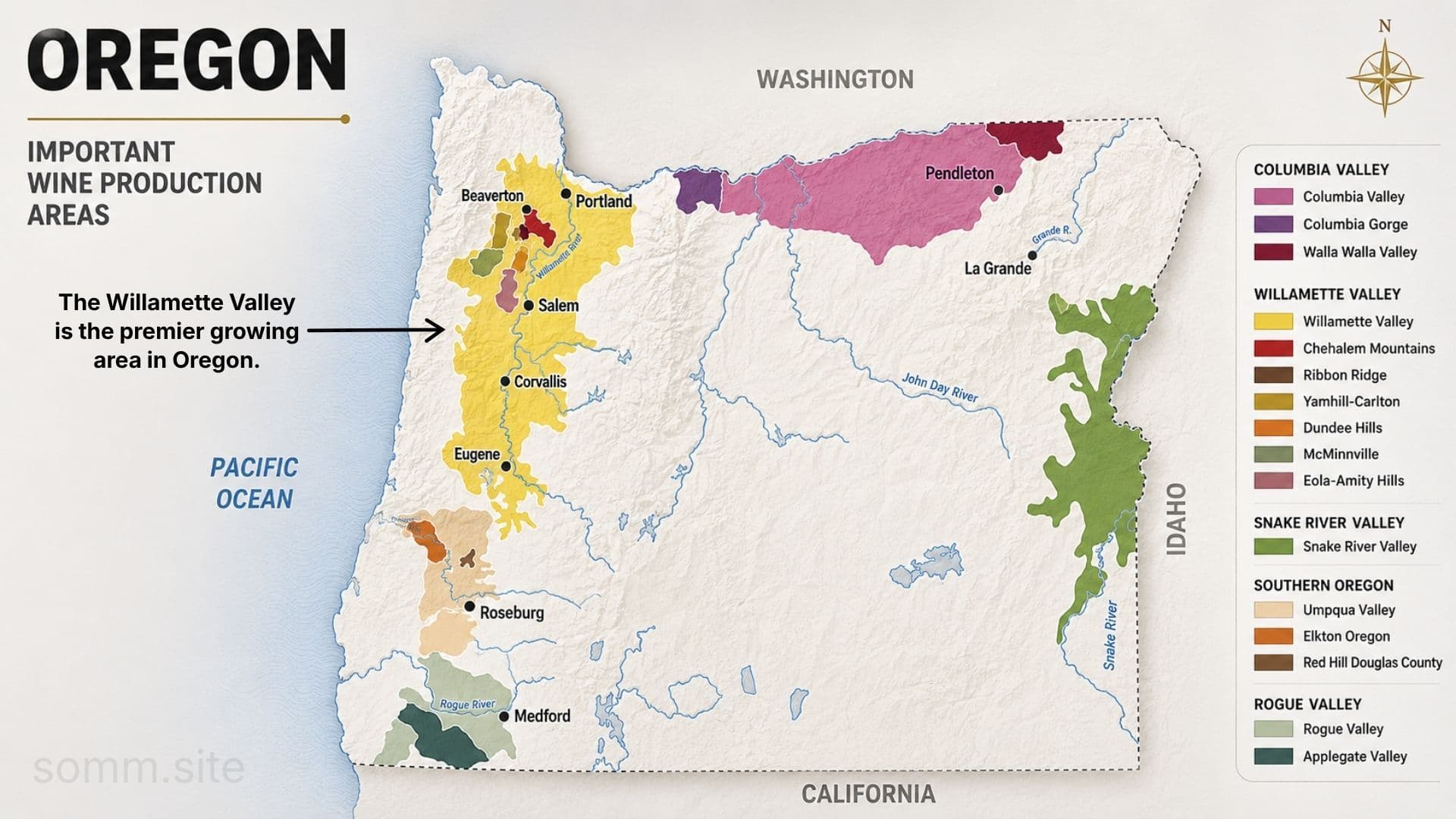
The Willamette Valley remains the heart of Oregon wine, containing the majority of the state's wineries and 10 nested sub-AVAs, including the Dundee Hills, Eola-Amity Hills, Chehalem Mountains, Yamhill-Carlton, and the Van Duzer Corridor. Each of these areas possesses distinct soil compositions and microclimates that produce notably different expressions of Pinot Noir. Beyond the Willamette Valley, the Southern Oregon AVA encompasses the warmer Rogue Valley and Umpqua Valley, where varieties such as Tempranillo, Syrah, and Cabernet Franc thrive. The state also shares the Walla Walla Valley and Columbia Gorge AVAs with Washington.
Pinot Noir is the defining grape of Oregon, accounting for 60 percent of all planted acreage and 58 percent of total production. Pinot Gris holds a strong second position, followed by Chardonnay, which commands the highest average price per ton in the state. Oregon's labeling laws are notably stricter than federal requirements: wines labeled with a grape variety must contain at least 90 percent of that variety, compared to the national standard of 75 percent.
Despite softening market conditions across the broader wine industry, Oregon continues to command premium pricing. The average case price increased nearly two percent in 2024 even as total case sales dipped to 5.8 million. The estimated value of the state's grape production reached $329 million. Oregon's story is one of intentional smallness, proving that in wine, as in many things, less can indeed mean more.
Washington State Wine
Washington State holds the distinction of being the second largest wine-producing state in the nation, yet it remains one of the most misunderstood. With over 1,000 wineries, more than 400 grape growers, and approximately 50,000 acres of planted vineyards spread across 21 American Viticultural Areas, Washington produces upward of 10 million cases annually and generates more than $10.5 billion in economic impact. Unlike the lush, rain-soaked image that the Pacific Northwest often conjures, nearly all of Washington's wine grapes, roughly 99 percent, are grown in the arid, sun-drenched eastern half of the state, sheltered from Pacific moisture by the rain shadow of the Cascade Range.
The history of Washington wine traces back to the mid-19th century, when German and Italian immigrants planted Vitis vinifera vines in the Yakima and Walla Walla areas. Commercial winemaking, however, did not gain meaningful traction until the 1960s and 1970s, when the precursors to Chateau Ste. Michelle and Columbia Winery began producing wines that attracted national attention. Each passing decade revealed new strengths: Riesling and Chardonnay in the 1970s, Merlot in the 1980s, and the emergence of Cabernet Sauvignon and Syrah in the 1990s and beyond.
Washington wine is less about imitation of Europe and more about expressing place... desert heat, maritime fog, mountain elevation, and quality winemaking in every bottle.
The Columbia Valley AVA serves as the broad umbrella designation, encompassing the majority of the state's growing regions and extending slightly into northern Oregon. Within it lie some of the most compelling sub-AVAs in the country, including the Yakima Valley, Walla Walla Valley, Horse Heaven Hills, Red Mountain, Wahluke Slope, and the Ancient Lakes. Red Mountain, in particular, has earned a reputation for producing some of the most concentrated and structured Cabernet Sauvignon in the New World, while Walla Walla has become synonymous with premium Syrah and Bordeaux-style blends. The Puget Sound AVA, located west of the Cascades, represents the state's only western AVA, though a new Mount St. Helens AVA has been proposed.
Cabernet Sauvignon leads Washington's production with over 40,000 tons crushed in 2024, followed by Riesling, Chardonnay, Syrah, and Merlot. In total, more than 80 grape varieties are cultivated. One of the state's greatest natural advantages is its extended summer daylight, with up to 17 hours of sunshine per day during peak growing season, roughly one hour more than California's prime regions. This, combined with dramatic diurnal temperature shifts between warm days and cool nights, produces grapes with ripe fruit character balanced by natural acidity.
Washington is navigating the same headwinds affecting the broader national wine market, including declining consumption, oversupply, and generational shifts in drinking preferences. Total harvest tonnage in 2024 fell to its lowest level since 2011, and the number of licensed wineries has contracted for two consecutive years. Yet the state's diversity of varieties, its growing number of AVAs, and its capacity to produce exceptional wines at multiple price points position it as one of the most dynamic and evolving wine regions in America.
The Rest of America: New York, Virginia, and the Emerging Frontier
While the Pacific Northwest and California dominate the conversation around American wine, the eastern half of the country has a viticultural history that predates them all, and a present that deserves serious attention.
New York ranks as the nation's second largest grape-producing state by volume and third in wine production, with 513 licensed wineries spread across 59 of its 62 counties and approximately 29,500 acres under vine. The state is home to 11 AVAs, though much of its acreage is planted to native Vitis labrusca varieties, primarily Concord, used largely for juice production. The true excitement lies in the Finger Lakes, where roughly 9,000 acres of vineyards surround glacially carved lakes that moderate temperatures and extend growing seasons. The Finger Lakes has earned international recognition for its Riesling, which accounts for 90 percent of the state's total plantings of that variety and produces wines ranging from bone-dry to lusciously sweet. Long Island, with its maritime climate and sandy glacial soils, operates as an entirely different wine region, specializing in Bordeaux varieties, particularly Merlot and Chardonnay. The Hudson River Region, one of the oldest wine districts in the country, is carving out a quiet identity around Cabernet Franc. New York's modern wine renaissance traces in part to Dr. Konstantin Frank, a Ukrainian immigrant who arrived in 1951 and proved that Vitis vinifera could survive the state's harsh winters, overturning decades of conventional wisdom. The industry generates nearly $15 billion in total economic activity and draws over 4.7 million wine tourists annually.
Virginia holds an even deeper claim to American wine history. The first colonial attempts at viticulture began in the early 1600s at Jamestown, and Thomas Jefferson famously, if unsuccessfully, attempted to cultivate European vines at Monticello. The modern era began in the 1970s, catalyzed by Italian winemaker Gianni Zonin's establishment of Barboursville Vineyards near Charlottesville in 1976. From just six wineries at that time, Virginia has grown to over 300, with approximately 4,000 acres under vine across eight AVAs and 10 recognized wine regions. The Monticello AVA, near Charlottesville, serves as the state's flagship, and was named Wine Enthusiast's Wine Region of the Year in 2023. Virginia's identity has been shaped by varieties that play supporting roles elsewhere but thrive in its humid continental climate: Viognier has become a signature white, while Cabernet Franc and Petit Verdot produce reds of notable elegance. Bordeaux-style blends consistently earn top honors at the annual Governor's Cup competition. The industry contributes roughly $1.7 billion to the state economy and supports an estimated 10,000 jobs.
Beyond New York and Virginia, wine is produced in all 50 states, with Texas, Michigan, Missouri, North Carolina, and Pennsylvania each supporting growing industries. The American wine map is far broader than the West Coast alone, and its eastern chapters are still being written.
Introduction to Canadian Wine
Canada is not the first country most people associate with winemaking. The harsh winters, short growing seasons, and vast northern geography seem, at first glance, incompatible with the cultivation of fine wine grapes. Yet Canada has quietly built one of the most distinctive wine industries in the New World, with approximately 860 wineries spread across multiple provinces, an annual economic impact exceeding $11.5 billion, and a global reputation anchored by a product no other country produces as consistently or at such scale: Icewine.
A History Shaped by Climate and Persistence
The earliest attempts at viticulture in Canada date to the early 19th century, when settlers along the Niagara Peninsula and in Nova Scotia experimented with native grape species. For more than a century, Canadian wine production relied almost exclusively on cold-hardy native varieties such as Concord and Niagara, as well as French-American hybrids. The results were functional but rarely inspiring, and the country developed little international reputation for quality wine.
The modern era began in 1975, when Donald Ziraldo and Austrian-born Karl Kaiser founded Inniskillin in Niagara-on-the-Lake, Ontario, receiving the first winery license issued in the province since Prohibition. Their insistence on planting European Vitis vinifera varieties in a climate that many experts considered unsuitable proved transformative. In 1984, Inniskillin produced its first commercial Icewine from Vidal grapes, and in 1991, their 1989 Vidal Icewine won the prestigious Grand Prix d'Honneur at Vinexpo in Bordeaux, France. That single award placed Canadian wine on the international stage and signaled that this cold-climate nation could produce something not just competent, but world-class.
The establishment of the Vintners Quality Alliance, known as VQA, in 1988 further professionalized the industry. VQA functions as Canada's appellation and quality assurance system, certifying that wines meet strict standards for grape origin, variety, and production methods. It remains the benchmark of authenticity and quality for Canadian wines, particularly in Ontario and British Columbia.
Ontario: The Eastern Anchor
Ontario is the largest wine-producing province by volume, home to over 194 VQA-registered wineries and approximately 18,000 acres of vineyards. The province produced nearly 65,000 tonnes of wine grapes in 2024 and sold 69 million litres of Ontario wine, generating an economic impact of $5.49 billion and supporting over 22,300 jobs.
The Niagara Peninsula is the heart of Ontario winemaking, benefiting from the moderating influence of Lake Ontario and the protection of the Niagara Escarpment. This combination creates a mesoclimate that extends the growing season and allows Vinifera varieties to ripen fully. Chardonnay, Riesling, Pinot Noir, Cabernet Franc, and Gamay are among the leading grapes, producing wines that tend toward elegance and acidity rather than the ripe, fruit-forward styles more common in warmer climates. Prince Edward County, a newer and cooler appellation located on a limestone plateau surrounded by Lake Ontario, has emerged as a compelling region for Chardonnay and Pinot Noir grown on soils remarkably similar to those found in Burgundy and Champagne.
Ontario also remains the epicenter of Canadian Icewine production, accounting for approximately 90 percent of the national output. The Vidal grape, a French-American hybrid prized for its thick skin and resistance to rot, is the workhorse of the Icewine industry, though Riesling and Cabernet Franc Icewines have gained devoted followings among collectors and critics alike.
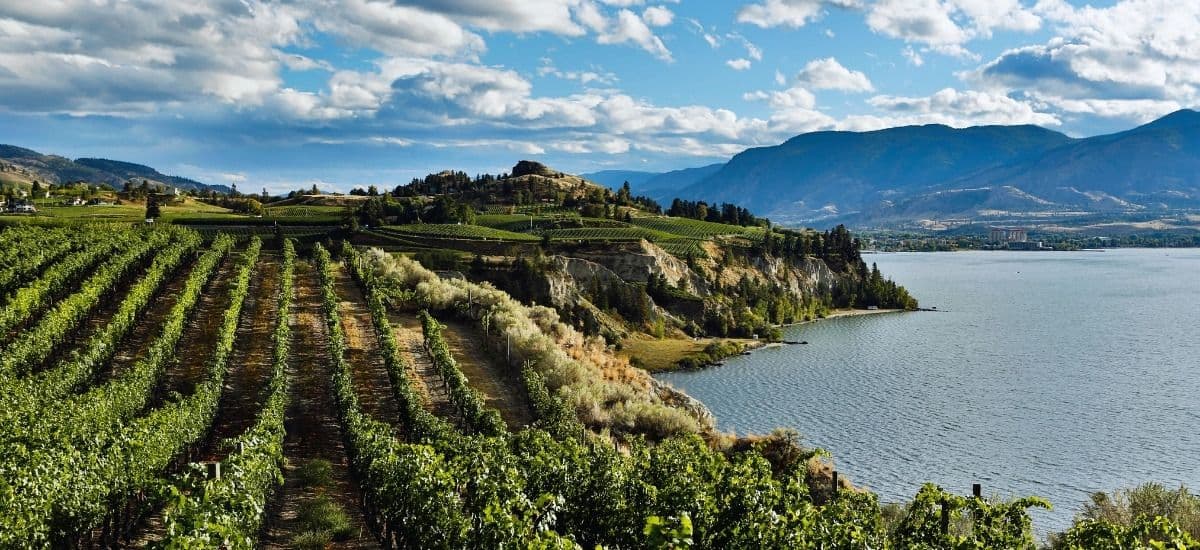 The Okanagan Valley wine region, located within the region of the same name in the British Columbia Interior, is Canada's second-largest wine producing area.
British Columbia: The Western Frontier in Recovery
British Columbia is home to roughly 350 licensed wineries and has historically been Canada's second largest wine-producing province. The Okanagan Valley, a narrow, lake-dotted corridor stretching over 250 kilometres through the province's interior, serves as the primary growing region. The valley's semi-arid climate, dramatic diurnal temperature shifts, and diverse soils have proven well suited to an impressive range of varieties, from Merlot and Cabernet Sauvignon in the warmer southern reaches around Osoyoos and Oliver to Pinot Noir, Chardonnay, and Riesling in the cooler northern areas near Kelowna. The Similkameen Valley, Vancouver Island, and the Fraser Valley contribute additional diversity.
However, the British Columbia wine industry has endured extraordinary hardship in recent years. A severe cold snap in December 2022 destroyed an estimated 58 percent of the province's grape crop. Then, in January 2024, a catastrophic polar vortex drove temperatures below minus 30 degrees Celsius in parts of the Okanagan, devastating between 97 and 99 percent of that year's grape production and causing an estimated $440 million in revenue losses. Approximately 15 percent of vines were permanently destroyed, and the province remains an estimated 10,000 tonnes short of the grapes needed to meet market demand. The B.C. government responded by allowing wineries to temporarily source grapes from outside the province, including from Washington State, to produce a 2024 vintage and retain their workforce. That support has been extended through the 2025 production year as replanting efforts continue.
Styles, Grapes, and What Lies Ahead
Canadian wine spans a broad stylistic range. Cool-climate whites, particularly Riesling and Chardonnay, represent some of the country's finest expressions, offering bright acidity and mineral complexity. Pinot Noir and Cabernet Franc lead the red portfolio, producing wines of finesse rather than power. Sparkling wine production is growing steadily in both Ontario and British Columbia, and of course, Icewine remains Canada's most iconic contribution to the global wine landscape. Canada is the world's largest producer of Icewine, producing a greater volume than all other countries combined.
The Canadian wine industry generates over $11.5 billion in total economic impact, supports more than 45,000 jobs, attracts over 4.2 million wine tourists annually, and contributes upward of $2.3 billion in tax revenue. Yet the industry faces real challenges: declining national consumption, competition from imports, climate volatility, and the long recovery ahead for British Columbia's vineyards. What remains clear, however, is that Canada's winemakers have repeatedly demonstrated that adversity and cold are not barriers to quality. They are, in many ways, the very conditions that define it.
Mexico: The Oldest Wine Region in the Americas
Mexico holds a distinction that surprises many: it is home to the oldest winemaking tradition in the Americas, dating to the Spanish colonial era of the 16th century. Casa Madero in the Valle de Parras, Coahuila, was founded in 1597 and remains the oldest winery on the continent. Today, Mexico has over 400 wineries spread across 16 wine-producing regions, though the overwhelming majority of production is concentrated in a single state. Baja California accounts for roughly 85 to 90 percent of the nation's total wine output.
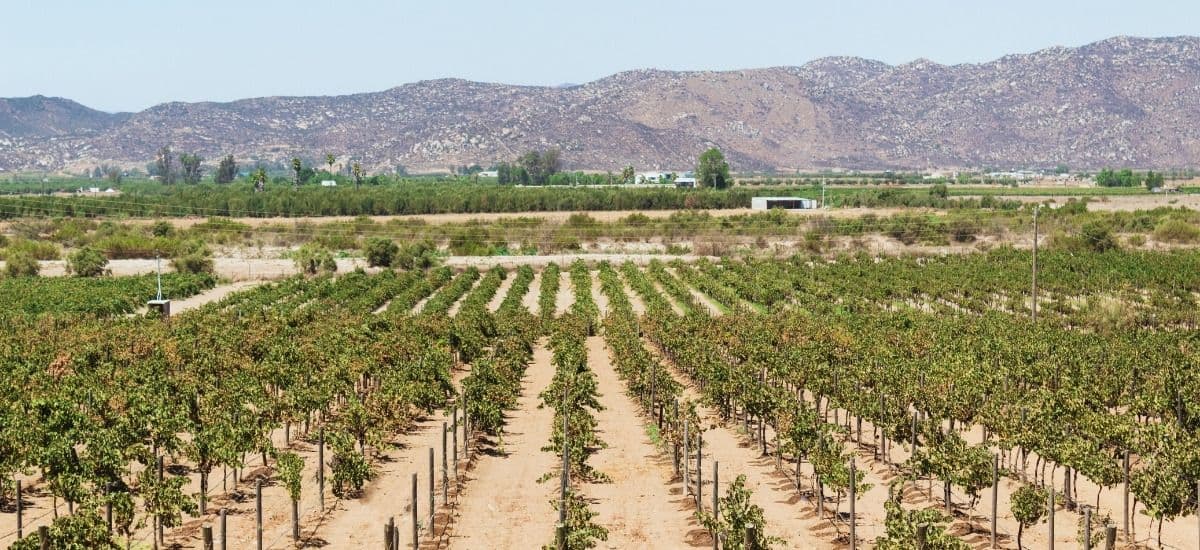 Mexico’s Guadalupe Valley is one of the oldest wine regions in the Americas, with viticulture dating back to the 16th century.
The Valle de Guadalupe, a narrow valley just northeast of the port city of Ensenada, serves as the epicenter of Mexican fine wine. Its Mediterranean climate, Pacific fog influence, and granite-rich alluvial soils create conditions remarkably similar to parts of Southern California and the Northern Rhone. The valley is home to over 150 wineries, most of them small-scale, artisanal operations producing fewer than 100,000 cases annually. Varietals from Southern France, Spain, Italy, and Portugal thrive here, with Tempranillo, Nebbiolo, Cabernet Sauvignon, and Grenache among the most planted. By 2024, three Valle de Guadalupe restaurants had earned Michelin stars, underscoring the region's emergence as a serious gastronomic and wine destination. Mexico's wine story is ancient, but its modern chapter is only beginning.
A Continent Still Evolving
North American wine stands at an inflection point. Shifting consumer preferences, climate volatility, oversupply in some regions, and generational changes in drinking habits have introduced real uncertainty across the industry. Yet the same pioneering instinct that drove missionaries to plant vines in 18th century California, that compelled David Lett to gamble on Pinot Noir in Oregon, and that inspired Karl Kaiser to harvest frozen grapes in a Canadian winter continues to define this continent's winemakers. North America's wine story is not finished. It is, by every meaningful measure, still being written.


