A Conversation about Barolo and Barbaresco
Two of Italy's greatest wines share a grape, a region, and a philosophical commitment to place. Understanding them together reveals more than comparing them ever could.
There is a persistent impulse to pit Barolo against Barbaresco, to declare one superior and relegate the other to a lesser tier. This framing misunderstands both wines and diminishes what makes each extraordinary. Barolo and Barbaresco are born from the same grape, Nebbiolo, grown in the same corner of northwestern Italy's Piedmont region, shaped by the same continental climate and the same ancient marine soils. They are siblings, not rivals. Their differences are real and worth examining carefully, but those differences are matters of scale, nuance, and expression rather than quality. Barolo tends toward power and longevity.
Both Barolo and Barbaresco must be made from 100% Nebbiolo grapes... no blending with other varieties is allowed by DOCG rules.
Barbaresco tends toward elegance and earlier accessibility. Neither tendency constitutes an advantage. What these two appellations share is a mutual devotion to terroir-driven winemaking that has produced some of the most profound and age-worthy red wines on the planet. To study one without the other is to read only half the story of what Nebbiolo can become when it finds the right soil, the right slope, and the right hand to guide it from vineyard to bottle.
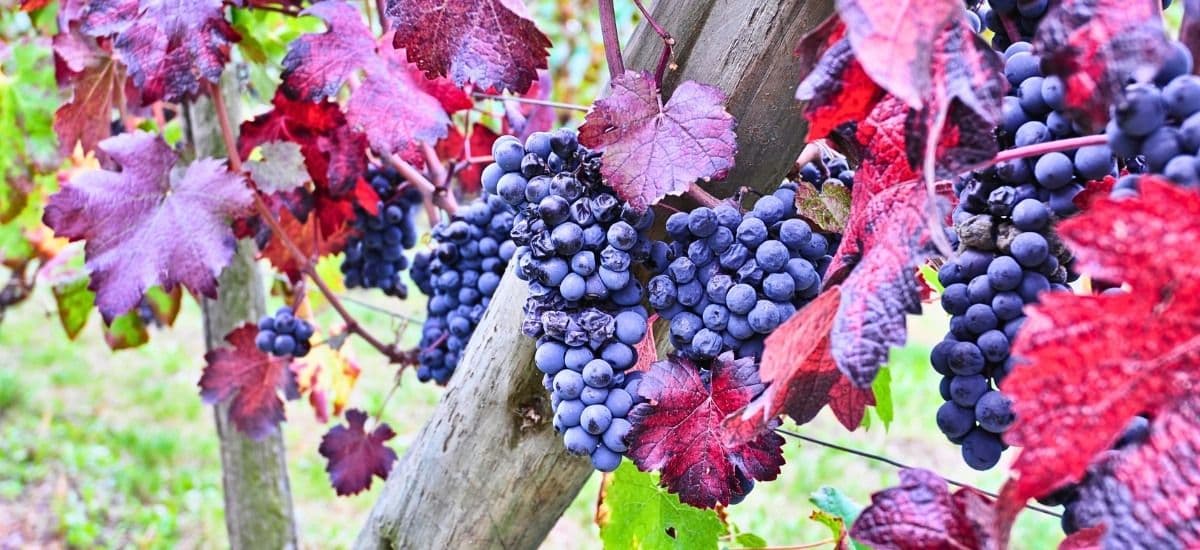 Despite being a powerful red, Nebbiolo wines are often lighter in color, much like Pinot Noir, even when rich and structured. Think power without weight.
The Langhe Hills and the Geography That Shapes Everything
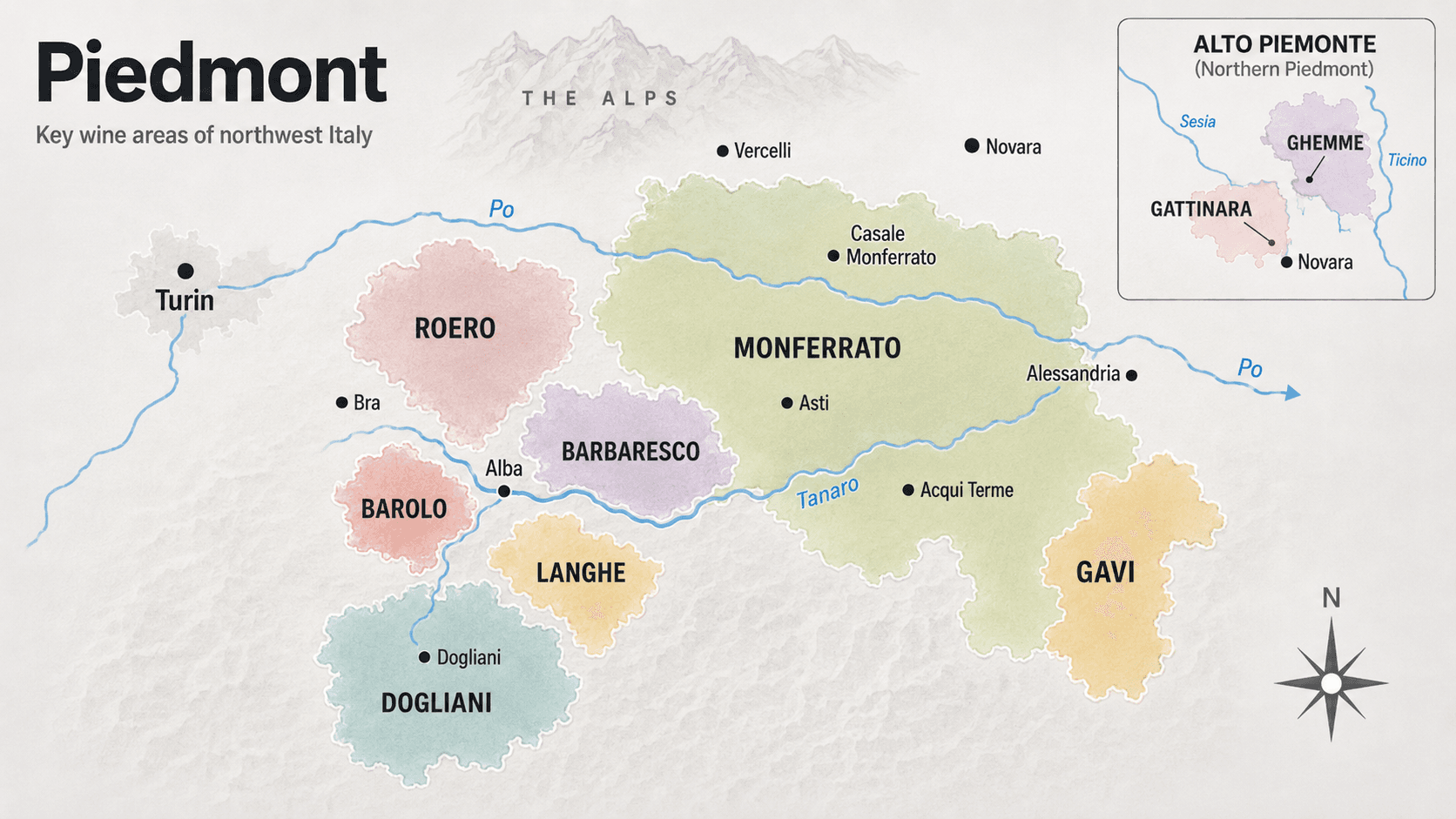
Both Barolo and Barbaresco sit within the Langhe, a series of rolling hills in the province of Cuneo in southern Piedmont, roughly 50 kilometers south of Turin. The landscape is dramatic and intimate at the same time, a succession of steep, vine-covered ridges separated by narrow valleys that channel fog, wind, and temperature in patterns that shift meaningfully from one hillside to the next. Barolo's production zone encompasses eleven communes, with the villages of Barolo, La Morra, Castiglione Falletto, Serralunga d'Alba, and Monforte d'Alba considered the most important. The Barbaresco zone is smaller, centered on three principal communes: Barbaresco, Neive, and Treiso. The soils across both appellations are primarily calcareous marl and sandstone of ancient marine origin, though the specific composition varies significantly between and even within communes.
In Barolo, the western communes around La Morra tend toward more fertile, clay-rich soils that produce rounder, more approachable wines, while the eastern villages like Serralunga sit on poorer, more compact soils that yield wines of greater tannic structure and aging potential. Barbaresco's vineyards generally occupy slightly lower elevations and benefit from moderating breezes off the nearby Tanaro River, which contributes to a marginally warmer microclimate. This geographic subtlety is not incidental. It is the foundation upon which every meaningful difference between these two wines is built.
Nebbiolo: One Grape, Two Vocabularies
Nebbiolo is among the most site-sensitive grape varieties in the world, a vine that reveals the character of its specific vineyard with an almost documentary precision. The name likely derives from nebbia, the Italian word for fog, a reference to the autumn mists that settle over the Langhe during the late harvest season. Nebbiolo ripens late, often not picked until mid-October, and demands the best-exposed sites to reach full physiological maturity. Its wines are paradoxical by nature: pale in color yet immensely structured, capable of fierce tannins in youth that gradually resolve into extraordinary complexity with age.
In Barolo, the grape produces wines that require a minimum of 38 months of aging before release, including at least 18 months in oak, with Barolo Riserva extending to 62 months total. The resulting wines are often muscular and tightly wound when young, revealing their full character only after years or even decades of cellaring. In Barbaresco, the minimum aging is 26 months, with nine in oak, and Riserva requires 50 months total. This shorter mandatory aging reflects the wines' generally earlier-drinking profile, though the finest Barbarescos age magnificently. Both appellations allow the same winemaking choices regarding oak, yet the resulting wines speak in different registers. Barolo tends toward tar, roses, dried herbs, and dark earth. Barbaresco often leans toward red cherry, violets, spice, and a more lifted aromatic profile. These are tendencies, not rules, and the best producers in both zones regularly blur the boundaries.
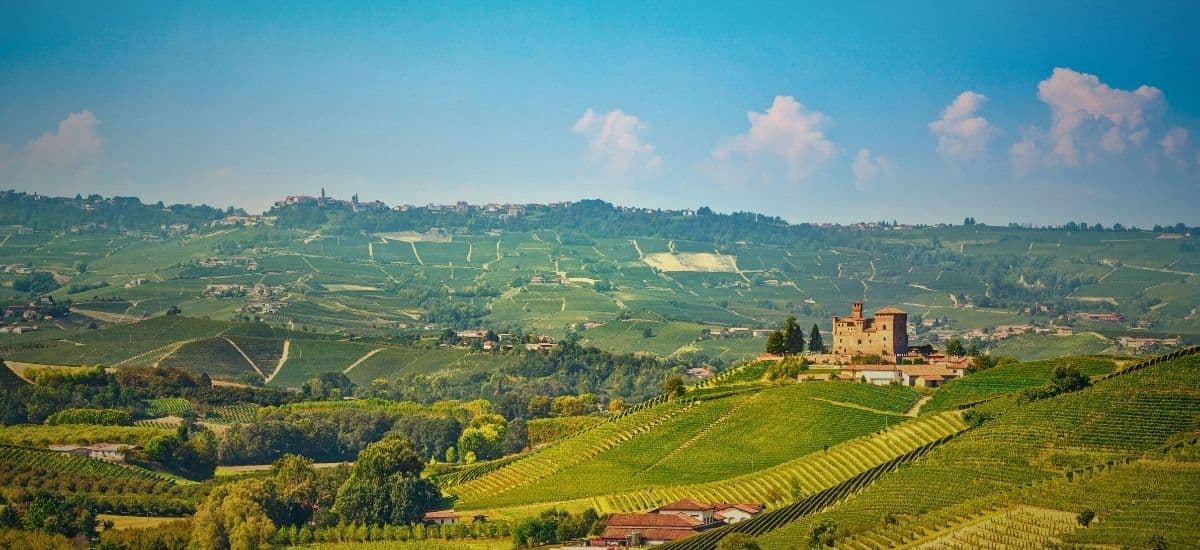 Barolo’s production area is nearly three times the size of Barbaresco’s, which contributes to broader stylistic diversity in Barolo wines.
What Arrives in the Glass
Tasting Barolo and Barbaresco side by side is one of the most instructive exercises available to anyone interested in how geography translates into flavor. A young Barolo from Serralunga d'Alba might present an almost impenetrable wall of tannin on first encounter, with aromas of dried rose petal, licorice, and truffle emerging slowly as the wine opens over an hour or more in the glass. A Barbaresco from the same vintage, perhaps from the Asili vineyard in Barbaresco village, might offer its pleasures more immediately, with bright red fruit, white pepper, and a floral lift that makes it approachable years earlier than its Barolo counterpart. Yet neither wine is simple. Both carry the telltale Nebbiolo signature of high acidity and firm tannin that gives them their remarkable aging trajectories.
The finest examples from either appellation can develop beautifully for 20 to 40 years, evolving through stages that reveal dried flowers, leather, tobacco, and an ethereal transparency that few other wines in the world can match. The tradition of single-vineyard bottlings in both zones has further deepened the conversation, allowing drinkers to explore how individual sites like Cannubi in Barolo or Rabaja in Barbaresco express themselves through the same variety in ways that are recognizably distinct.
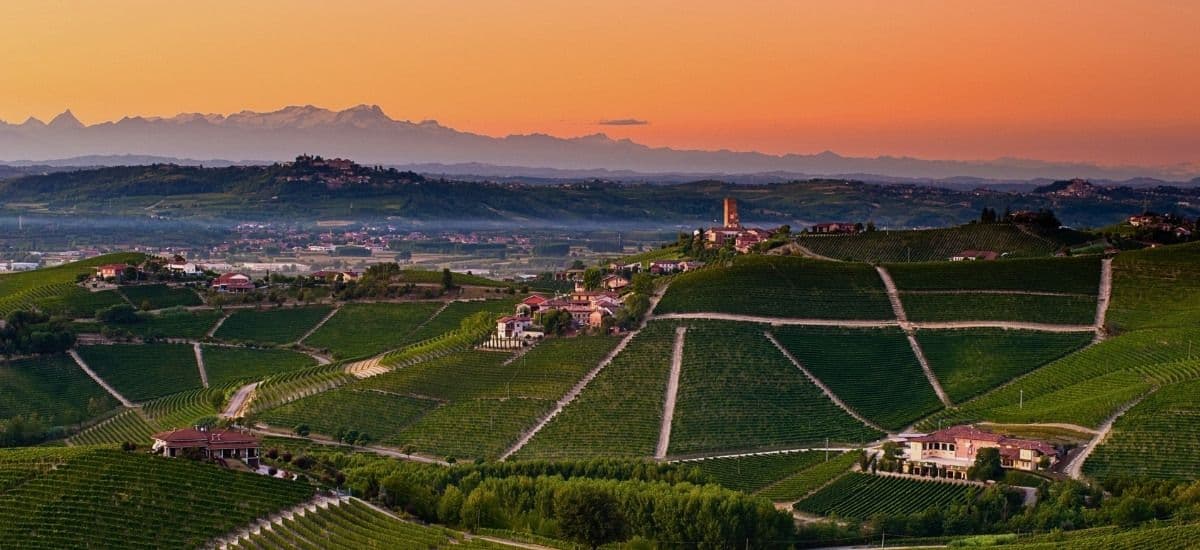 Barbaresco’s soil tends to be richer and more nutrient-dense, which often leads to wines that are slightly less tannic and quicker to mature than Barolo.
The Takeaway
Barolo and Barbaresco are not competing versions of the same idea. They are complementary expressions of what happens when a single, profoundly site-sensitive grape variety encounters different but related landscapes within the same viticultural tradition. Barolo offers grandeur, structural power, and a patience-rewarding depth that can border on the monumental. Barbaresco offers finesse, aromatic immediacy, and an approachability that does not sacrifice complexity. Neither is better. They are simply different conversations about the same subject, conducted in slightly different tones of voice.
The drinker who dismisses Barbaresco as a lesser Barolo misses the point entirely, just as the one who avoids Barolo for its tannic reputation overlooks the transcendence that awaits on the other side of patience. These wines belong together in any serious exploration of Italian viticulture, and experiencing them in dialogue with each other, comparing vintages, communes, and single vineyards across both appellations, is one of the most rewarding pursuits available to anyone who believes that a glass of wine can be both a sensory pleasure and an education in place.