Island Terroir: Why Corsican Wine Deserves Your Attention
Corsica produces some of the most distinctive and least understood wines in France, shaped by a history as rugged and independent as the island's own landscape.
Corsica sits in the western Mediterranean closer to Italy than to mainland France, and its wines reflect that geographic and cultural tension with remarkable clarity. The island has been producing wine for over two thousand years, with viticulture arriving through Greek colonists who founded the settlement of Alalia, modern-day Aleria, around 565 BC. Centuries of Genoese rule followed, embedding Italian grape varieties and winemaking traditions deep into the island's agricultural identity.
Yet Corsica has been a French territory since 1768, and its wines carry French appellation designations, are governed by French wine law, and sit on French restaurant lists. This dual identity is not a contradiction so much as a defining characteristic. The wines of Corsica are neither fully French nor fully Italian. They belong to the island itself, shaped by its granite and schist soils, its mountain winds, its maritime climate, and a fiercely local culture that has historically resisted outside influence with the same determination it brings to preserving its indigenous grape varieties.
Corsican wine tastes like the Mediterranean looks, bright, rugged, sun kissed, and quietly powerful.
Where Mountains Meet the Sea
Corsica is the fourth largest island in the Mediterranean, roughly 183 kilometers long and 83 kilometers wide, with a mountainous interior that rises above 2,700 meters at its highest point. The vineyards occupy a narrow band around the island's perimeter, concentrated primarily along the eastern plains and the coastal hillsides of the north and south. This geography creates enormous diversity within a relatively small growing area, as altitude, exposure, soil composition, and proximity to the sea vary dramatically from one commune to the next.
The island holds one broad regional appellation, Vin de Corse, which covers vineyards across the territory, along with five more specific appellations that reflect distinct subregions. Patrimonio, in the north, sits on limestone and clay soils around the Cap Corse peninsula and is widely regarded as the island's most prestigious zone. Ajaccio, on the western coast, produces wines from granite-derived soils with a warmer, drier profile. The eastern appellations of Porto-Vecchio, Figari, and Sartene round out the designated areas, each contributing wines with their own sense of place. Muscat du Cap Corse, a vin doux naturel made from Muscat Blanc a Petits Grains, represents the island's most celebrated sweet wine tradition.
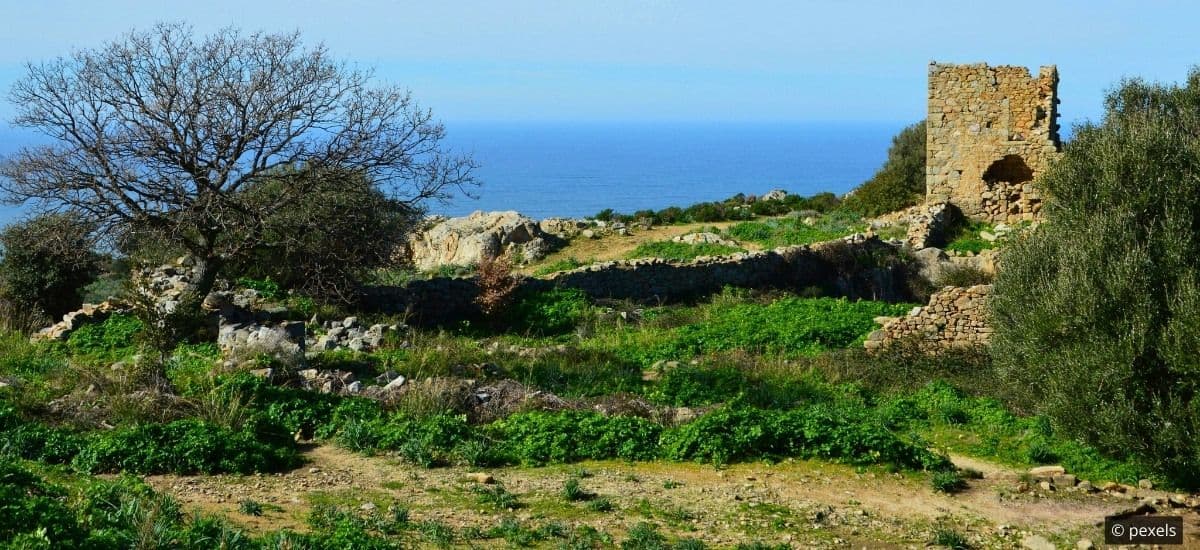 Few French regions feel as untamed as Corsica, and that raw landscape shows up in every bottle.
The Grapes That Define the Island
Corsica's most important contribution to the wine world may be its grape varieties, several of which are shared with Sardinia and mainland Italy but express themselves with a distinctly Corsican accent. Nielluccio, genetically identical to Sangiovese, is the dominant red grape of Patrimonio and produces structured, aromatic wines with notes of red fruit, dried herbs, and a firm tannic backbone that rewards aging. Sciacarello, found primarily around Ajaccio and the western coast, offers a lighter, more perfumed style with peppery spice, soft tannins, and a delicacy that has drawn comparisons to Pinot Noir in its aromatic complexity if not its structure.
For white wines, Vermentino dominates, known on the island as Vermentinu and producing wines of notable freshness, with citrus, white flower, and sometimes saline characteristics that reflect the island's coastal influence. These three varieties form the backbone of Corsican viticulture, though plantings of Grenache, Cinsault, and Syrah exist as well, often used in blending to add depth or approachability. The island's total vineyard area has contracted significantly from its mid-twentieth century peak, when bulk production on the eastern plains defined Corsican wine's reputation. The modern era has seen a deliberate shift toward quality, with younger producers embracing indigenous varieties, organic and biodynamic farming, and lower yields that let the island's terroir speak more clearly.
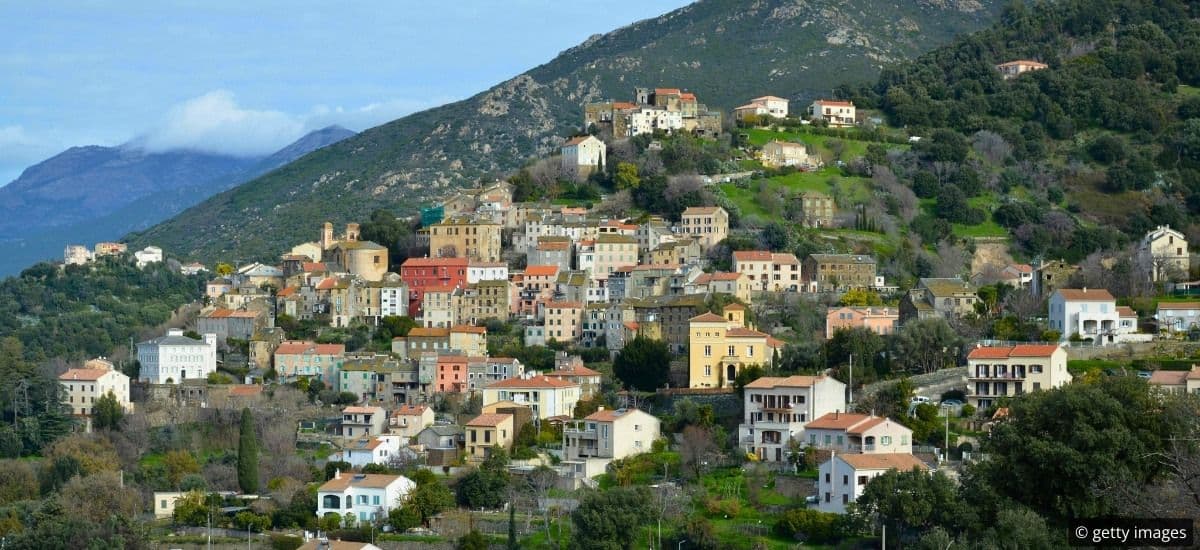 Here, mountain elevations and coastal breezes sculpt wines with freshness and tension despite the island sun.
A History Written in Conquest and Resilience
Understanding Corsican wine requires understanding Corsican history, because the two are inseparable. Greek settlers introduced the vine, but it was the Romans who expanded viticulture across the island, and the Genoese who shaped its character over nearly five centuries of colonial rule ending in 1768. Under Genoa, Corsican agriculture was oriented toward export, and wine was among the island's primary commodities. The Italian influence on grape selection during this period explains why Corsica's most important varieties have Tuscan and Sardinian roots rather than French ones.
French acquisition brought new administrative structures but did not immediately reshape the vineyard. The phylloxera crisis of the late nineteenth century devastated Corsican vineyards as it did those across Europe, and recovery was slow. The mid-twentieth century saw a wave of repatriated French settlers from North Africa, known as pieds-noirs, who planted high-yielding varieties on the eastern plains and oriented production toward volume rather than quality. This period damaged the island's reputation considerably. The modern renaissance began in the 1960s and 1970s with the establishment of AOC designations and a renewed commitment among a generation of growers to indigenous varieties, hillside viticulture, and wines that reflected place rather than market demand. That effort continues today, and it is producing some of the most compelling and undervalued wines in the Mediterranean.
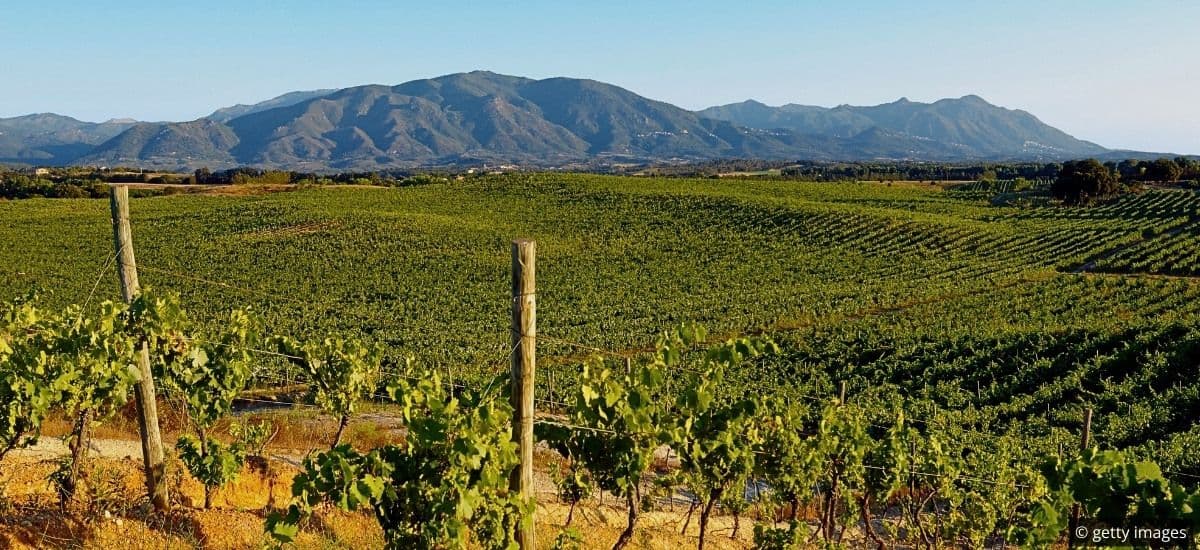 Compared to more famous French appellations, Corsica often delivers character driven wines at accessible price points. Patrimonio, pictured here, is a source of unique and value-driven wines.
The Takeaway
Corsica occupies a rare position in the wine world as a region with ancient viticultural roots, a compelling palette of indigenous and historically adopted grape varieties, and a landscape of extraordinary natural beauty that directly shapes what ends up in the glass. Its wines remain underrepresented on most lists and shelves, which means they also remain underpriced relative to their quality, a reality that will not last indefinitely as the broader market continues to discover Mediterranean island wines.
What makes Corsican wine worth seeking out is the same quality that defines the island itself: an unwillingness to conform. These are wines that taste like a specific place, carrying the salt air, the granite dust, the herbal scrub of the maquis, and the centuries of cultural layering that make Corsica unlike anywhere else in France or Italy. For anyone drawn to wines with a sense of identity, Corsica is one of the most rewarding regions to explore, and one of the few where genuine discovery is still possible at every price point.


