Washington State is the Bridge Between Two Worlds
America's second-largest wine-producing state makes some of the country's most compelling reds, yet it remains one of the least understood wine regions on the planet. That is starting to change.
Washington State occupies a peculiar position in the wine world. It is home to more than 1,000 wineries and over 60,000 acres of vineyard, making it the second-largest wine producer in the United States. Its Cabernet Sauvignons and Merlots have earned perfect scores from major critics. Its Syrahs have drawn comparisons to the Northern Rhône Valley. Yet ask the average wine drinker to name a Washington wine region and you are likely to be met with a blank stare or, at best, a tentative mention of Walla Walla.
The disconnect between quality and recognition is partly geographic. Nearly all of Washington's vineyards sit on the eastern side of the Cascade Range, hours from Seattle and far from any tourist corridor. Visiting requires deliberate effort rather than a casual afternoon drive. But what awaits is extraordinary. Washington's combination of desert climate, ancient flood-carved soils, and extreme daylight hours produces wines that occupy a stylistic space genuinely their own, sitting between the ripe generosity of California and the structured restraint of Bordeaux in a way that few other regions can match.
Washington State has established itself as one of the most important wine-producing regions in the United States, second only to California in total production. For students of wine, it offers a clear and structured example of how climate, geography, and irrigation shape style.
A Desert Shaped by Catastrophic Floods
The terroir of eastern Washington begins with a geological event of almost incomprehensible scale. Between 15,000 and 18,000 years ago, a series of cataclysmic floods known as the Missoula Floods tore across the landscape when an ice dam repeatedly collapsed in present-day Montana, releasing a body of water roughly half the volume of Lake Michigan in a matter of days. These floods scoured the basalt bedrock of the Columbia Basin and deposited vast layers of gravel, sand, silt, and windblown loess that now form the foundation of Washington's vineyard soils. The result is well-drained, mineral-rich terrain unlike anything found in California or Oregon.
The climate is equally distinctive. Eastern Washington is a high desert, receiving only six to eight inches of rainfall annually, roughly equivalent to the Gobi. The Cascade Range blocks Pacific moisture from reaching the vineyards, creating conditions of intense sunshine and aridity that give growers extraordinary control over water through drip irrigation. Summer days are long and warm, often exceeding 100 degrees, but the continental climate produces dramatic temperature drops at night, sometimes plunging 40 degrees or more between afternoon and dawn. This diurnal swing is the secret behind Washington's best wines: the heat builds ripe fruit flavors and concentration, while the cool nights preserve the natural acidity that gives the wines their structure and freshness.
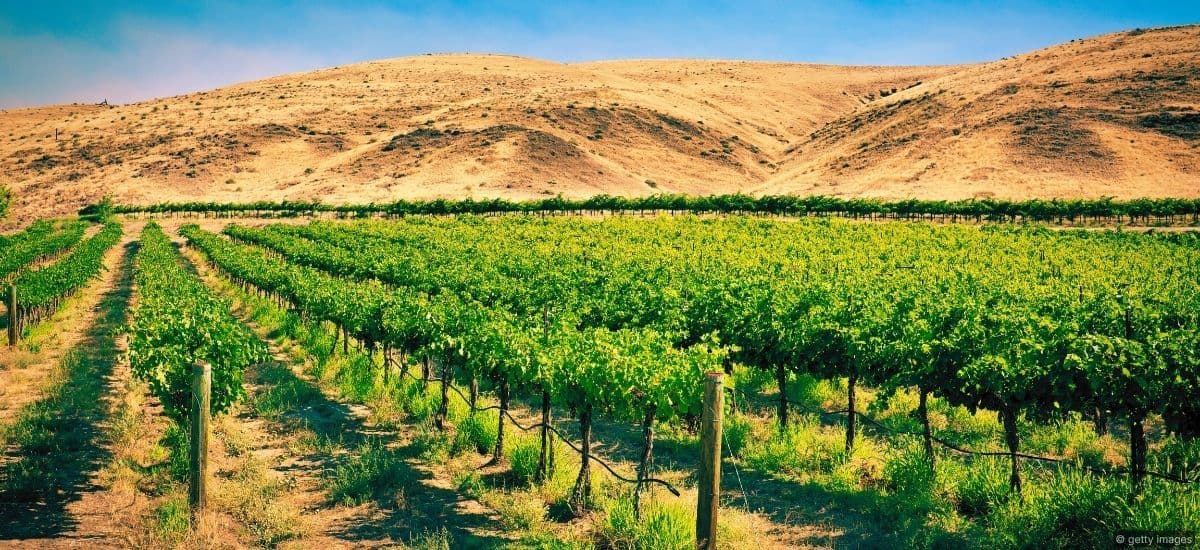 A small but highly regarded AVA, Red Mountain is known for powerful, structured Cabernet Sauvignon. Its warm, arid conditions and mineral-rich soils produce wines with concentration and ageability.
From Riesling Roots to Cabernet Ambition
Washington's modern wine industry is remarkably young. While settlers planted Cinsault grapes in the 1860s and Dr. Walter Clore began experimental vinifera plantings in the 1930s, the commercial industry did not take shape until the 1960s and 1970s, when pioneers like Chateau Ste. Michelle and Leonetti Cellar demonstrated that the Columbia Valley could produce serious wines from European grape varieties. The state's first AVA, Yakima Valley, was established in 1983. The Columbia Valley followed in 1984. As of last count, Washington contains 20 recognized AVAs, nearly all of them nested within the Columbia Valley's vast borders.
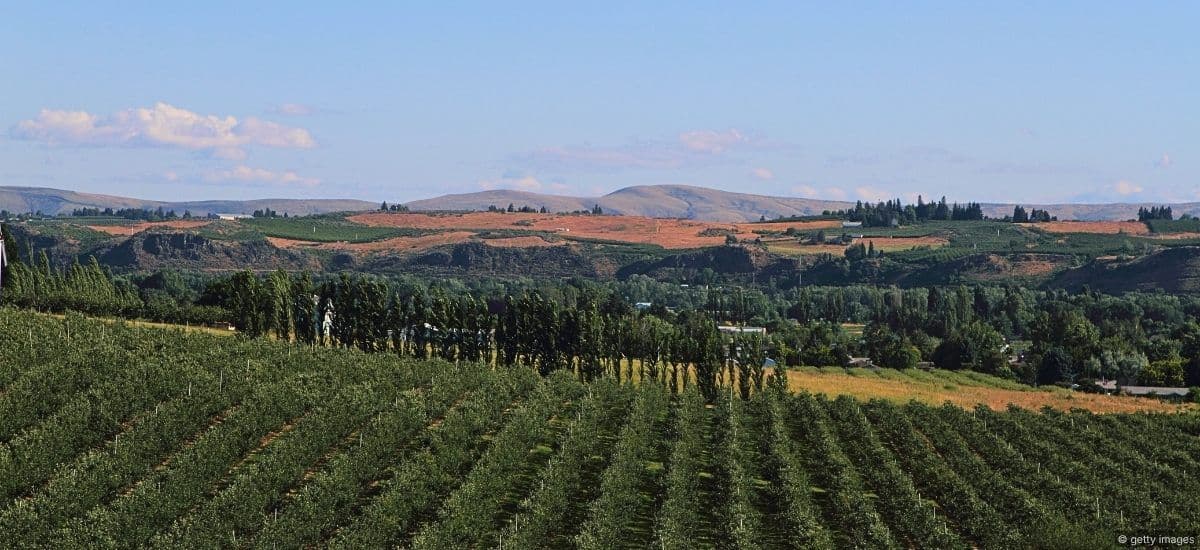 One of the most prominent AVAs in the state, Yakima Valley is diverse in climate and soils. It produces a wide range of wines, from structured reds to aromatic whites like Riesling.
Cabernet Sauvignon is now the most planted grape in the state, followed by Merlot, Chardonnay, Riesling, and Syrah. The sub-appellations that have earned the most critical attention read like a roll call of emerging greatness: Walla Walla Valley, with its deep loess soils and elegant Bordeaux-style reds. Red Mountain, the smallest and warmest AVA, producing Cabernets of extraordinary tannic structure and concentration. Horse Heaven Hills, where consistent winds off the Columbia River moderate temperatures and yield wines of aromatic lift and finesse. Each of these regions produces wines with a recognizable house character, yet all share the common thread of Washington's signature combination: vivid fruit, defined acidity, and a textural balance that places them in conversation with wines costing significantly more from better-known addresses.
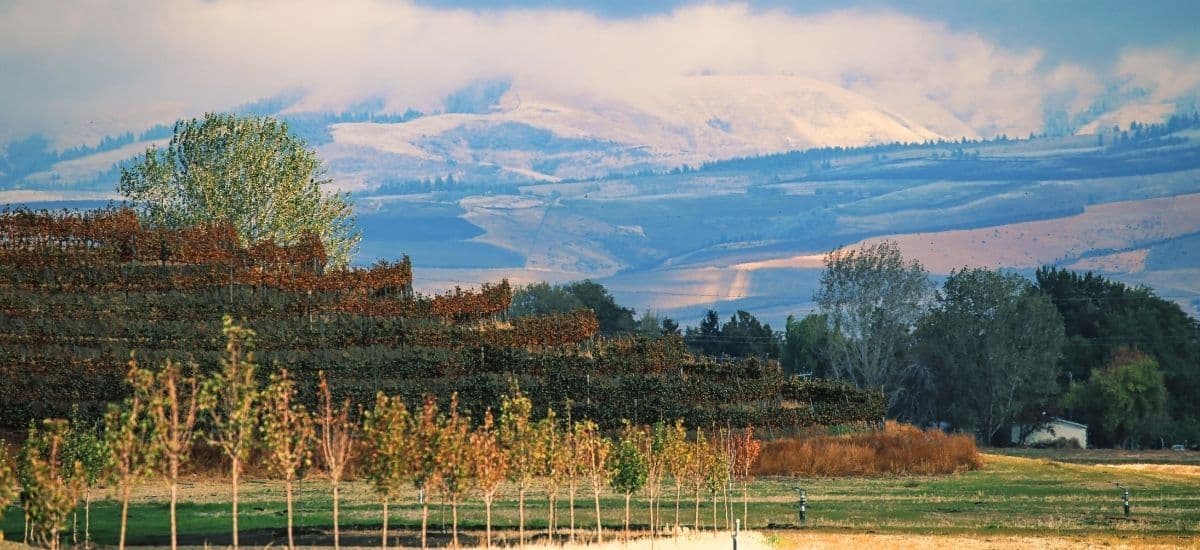 Known for premium Cabernet Sauvignon, Merlot, and Syrah, Walla Walla produces some of Washington’s most refined and complex wines. The region combines warm days with cool nights, allowing for depth without sacrificing balance.
The Sommelier's Secret Weapon
For wine professionals who work restaurant floors and build wine lists, Washington occupies a uniquely useful position. The state's best Cabernet Sauvignons and Merlots offer something that is genuinely difficult to find elsewhere: a bridge between the bold, fruit-driven style of Napa Valley and the more austere, tannic architecture of Bordeaux. A well-made Washington Cabernet delivers the ripe dark fruit and approachable texture that American palates respond to, but it carries an underlying structure of acidity and savory complexity that keeps it from tipping into the richness that can make California reds feel one-dimensional at the table. For the sommelier guiding a guest from familiar Napa Cabernet toward the more cerebral pleasures of classified Bordeaux, Washington is the logical middle step.
 Cabernet Sauvignon is like most grapes, reflecting the land it comes from in the glass. Here we see a comparison, generally speaking, of Washington State versus the two most popular examples of this grape.
This stylistic diversity extends beyond Cabernet. Washington Syrah, particularly from Walla Walla and the Rocks District of Milton-Freewater, produces wines of a peppery, meaty, mineral-driven character that invites direct comparison with Cote-Rotie and Cornas. Washington Merlot, unburdened by the variety's post-Sideways stigma, quietly produces some of the most complete and age-worthy examples in the country. And the state's Rieslings, from the cooler reaches of the Yakima and Columbia Valleys, offer a precision and mineral tension that place them among the finest produced anywhere outside of Germany and Alsace. The quality-to-price ratio across all of these categories remains among the most favorable in American wine.
The diverse conditions allow grapes to achieve ripeness in Washington, while maintaining acidity and structure. The result is a dynamic terroir that produces a unique style of wine specific to Washington State.
The Takeaway
Washington State's wine industry is built on a paradox. It possesses terroir of genuine world-class caliber, a desert landscape carved by prehistoric floods into some of the most varied and expressive vineyard soils in the United States. It produces wines that compete with the finest from California, Bordeaux, and the Rhône Valley. Yet its geographic isolation from major population centers and its relatively short history in the global marketplace mean that it remains undervalued and underexplored by a significant portion of the wine-drinking public.
For the curious consumer, that gap between quality and recognition is an opportunity. Washington wines offer complexity, structure, and varietal authenticity at price points that more established regions can no longer match. For the professional, they offer one of the most versatile tools available for building a list that speaks to both New World and Old World sensibilities without requiring the guest to make a stylistic leap. Whether it is a Red Mountain Cabernet that splits the difference between Napa and Pauillac, a Walla Walla Syrah with the savory depth of the Northern Rhone, or a Columbia Valley Riesling of crystalline precision, Washington delivers the kind of wine that makes a person stop and pay attention. The rest of the world is beginning to notice. The smart move is to get there first.


